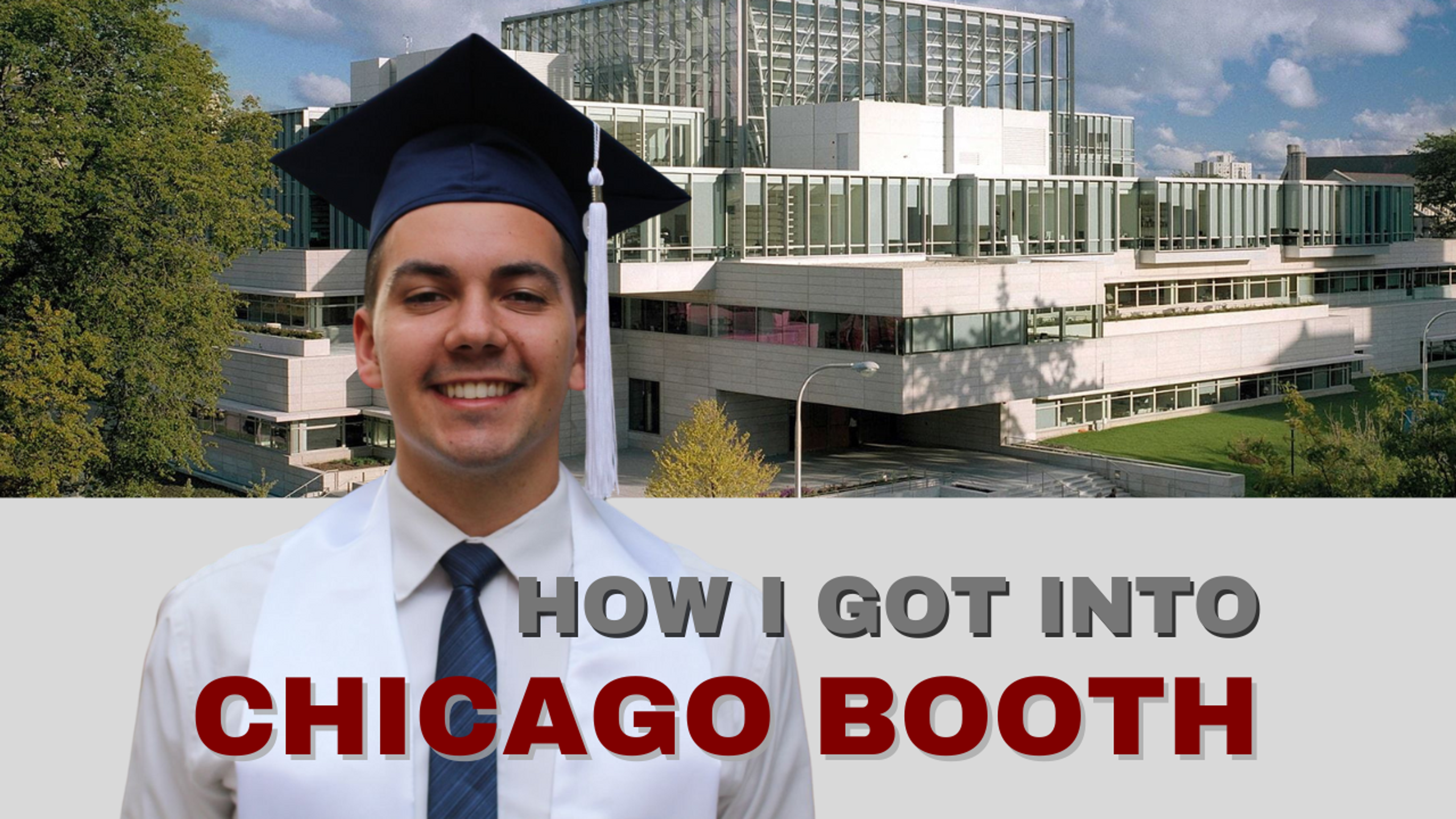
How to Answer the “Why Booth?” Interview Question
Learn how to answer “Why Booth?” with Chicago Booth MBA interview tips, sample answers, reasons to choose Booth, and common mistakes to avoid.

By Timothy F.
Former Ad Comm | 200+ M7 Admits | Ranked top 3 firm on Poets & Quants 2025
Posted October 20, 2026



Join a livestream
Learn from top experts and industry experts in live, interactive sessions you can join for free.
 Starts in 10 hours106 registered

 Nov 2, 2026 at 11:00 PM35 registered

 Nov 3, 2026 at 12:00 AM38 registered

 Nov 3, 2026 at 12:00 AM992 registered

Table of Contents
In the world of MBA admissions, an interview at the esteemed Chicago Booth School of Business offers a coveted opportunity to not only showcase your qualifications but also to deeply articulate the pivotal question: "Why Booth?" As you step into this interview, it will be paramount to demonstrate your profound understanding of the school's ethos and its unique academic offerings.
To help you prepare, I present to you reasons that will not only exhibit your grasp of Chicago Booth's distinct attributes but also affirm your commitment to embarking on an educational journey that aligns perfectly with the institution's unique differentiation. Your ability to weave these reasons into your interview responses will undoubtedly underscore your alignment with Booth's values and highlight the thoughtfulness behind your application.
Read: Chicago Booth — MBA Program & Application Overview
Tim F., an expert coach and Chicago Booth alumnus, provides actionable tips on how to tailor your interview responses to showcase a genuine connection between your aspirations and Booth's offerings.
What Is Chicago Booth Looking for in Your “Why Booth?” Answer?
Chicago Booth wants to understand why its MBA is the right fit for your goals and why you are a strong fit for Booth. Your “Why Booth?” answer should connect your career plans to specific Booth resources while showing how you would add to the school’s community.
Focus on three things:
- Career alignment: Explain how Booth will help you reach your post-MBA goals.
- School-specific reasons: Identify courses, programs, clubs, faculty, or other Booth opportunities that directly support those goals.
- Personal fit: Show how Booth’s flexible, analytical approach to learning and its community align with your interests, values, and perspective.
For this admissions cycle, Booth’s Full-Time MBA application does not include a separate “Why Booth?” essay. It instead includes four required short-answer prompts, each limited to 300 characters, covering career goals and personal details. If invited to interview, you can expand on why you chose Booth and how you would contribute to the community.
Reasons to Choose Chicago Booth for Your MBA
1. A Flexible Curriculum
At Chicago Booth, you can shape your MBA around your interests and career goals. Choose concentrations and electives that build expertise in your target field, or explore subjects beyond business. You can also take up to six courses outside Booth, subject to program requirements. If you're comparing top MBA programs, consider how this flexibility would help you prepare for your next career move.
2. Faculty With Deep Research Expertise
Booth's faculty includes researchers whose work has influenced fields such as economics, finance, and management. Learning from these scholars can help you understand the ideas behind business decisions and market behavior. If a professor's research interests you, explain how it connects to your professional experience and what you hope to learn.
3. An Analytical Approach to Business
At Booth, you're encouraged to question assumptions, evaluate evidence, and develop your own perspective. This approach can help you make sound decisions when facing complex problems or incomplete information. If you've used analytical thinking to solve a challenging problem at work, consider how Booth's academic approach could strengthen that skill.
4. Entrepreneurship Resources at the Polsky Center
The Polsky Center for Entrepreneurship and Innovation offers resources for students who want to develop business ideas and launch ventures. If you're planning your first startup or looking to bring innovation to an established company, explore how Polsky's programs could help you test ideas and move them forward. Identify the resources that align with your goals instead of relying on Booth's entrepreneurial reputation alone.
5. Leadership Development Through LEAD
Booth's Leadership Effectiveness and Development (LEAD) program helps Full-Time MBA students strengthen their communication, teamwork, and leadership skills. Through practical exercises and feedback, you can better understand your leadership style and identify areas for improvement. If you're preparing to manage larger teams or take on greater responsibility, this experience can help you become a more effective leader.
6. Access to Chicago's Business Community
Chicago gives you access to employers across finance, consulting, healthcare, technology, and other industries. Studying on campus can help you explore career opportunities and build professional relationships. Consider how the city's employers, industry networks, and location align with the career you want to pursue after your MBA.
7. Academic Depth in Finance
Booth has a long-standing reputation for research and teaching in finance and financial economics. If you're pursuing investment management, corporate finance, or a related field, you can explore topics such as valuation, investment analysis, and financial theory. When explaining this as a reason for choosing Booth, identify the specific knowledge you need to develop and how it supports your post-MBA goals.






How to Structure Your “Why Booth?” Interview Answer
A strong “Why Booth?” answer connects your career goals, professional experience, and specific reasons for choosing the school. Follow these three steps to build a focused, convincing response.
- Start with your career direction. Explain what you want to accomplish after your MBA and which skills or experiences you need to develop.
- Connect your goals to Booth. Choose two or three specific opportunities, such as the flexible curriculum, LEAD, or the Polsky Center. Explain how each supports your plans.
- Show your personal connection. Draw on your professional experience, conversations with Booth students or alumni, or firsthand observations to explain why the school fits your goals.
For example, an applicant moving from product management into investment management might connect Booth’s flexible curriculum to their need for deeper finance knowledge and its analytical approach to their experience evaluating complex problems.
Example of a Strong “Why Booth?” Interview Answer
“I've spent the past four years in product management, where I've learned how to evaluate customer needs, make decisions with incomplete information, and work with cross-functional teams. Through that experience, I've become increasingly interested in how investors evaluate companies and allocate capital. My immediate post-MBA goal is to move into investment management.
Booth appeals to me for two main reasons. First, the flexible curriculum would allow me to build on my existing business background while concentrating on finance and investment analysis. I'm particularly interested in developing a stronger foundation in valuation and financial economics.
Second, Booth's emphasis on questioning assumptions fits the way I like to approach problems. In product management, I've learned that the most useful insights often come from challenging what a team believes it already knows. I'd like to bring that perspective into the classroom while learning from classmates with different professional experiences.
For me, Booth offers the combination of academic flexibility and intellectual culture that would help me make this career change.”
As you can see, this answer works because the applicant doesn't simply claim that Booth has a strong finance program. They explain their current experience, identify a specific career transition, and connect two relevant aspects of Booth to that goal. Aim for a focused, conversational response. Practice answering in approximately 60-90 seconds, then adjust naturally based on the interviewer's questions and follow-ups.
Note that this example is illustrative. Do not use this as a script or memorize it.
Common Mistakes to Avoid When Answering “Why Booth?”
Treating the Interview Like a Sales Pitch
Trying too hard to impress can make your answer sound rehearsed. You don't need to portray Booth as the perfect school or mention every resource you've researched. Show genuine intellectual curiosity, explain what draws you to the Chicago Booth School, and be ready to discuss your reasons naturally.
Repeating Your Resume
Your interviewer has already reviewed your Booth application. Simply recounting your professional history misses the chance to explain how your experiences shaped your ambitions. Choose a relevant example, such as a leadership challenge or an unexpected career change, and explain its significance. This helps the interviewer understand your career trajectory and why an MBA makes sense for your next step.
Giving Vague Career Goals
Saying you want to work in consulting, finance, or technology doesn't fully explain your post-MBA career goal. Clarify the role you want to pursue, what you hope to accomplish, and which skills you still need to develop. Your immediate goal doesn't have to define your entire career, but you should be able to explain how the Booth MBA fits your plans.
Making Claims You Can't Support
Don't name a professor, course, or student organization simply because it appears on the Chicago Booth website. Understand how the resource works and why it matters to you. If your interviewer asks for further explanation, you should be able to connect it to your interests or experience. This preparation also helps you explain what appeals to you about Booth's analytical rigor and academic experience.
Struggling to Explain Why Now
Explaining why Booth appeals to you is only part of the answer. You should also be able to explain why pursuing an MBA at this stage makes sense. Identify the gap between your current experience and your next career step, then show how Booth can help you bridge it. A clear explanation of your timing makes your decision feel deliberate and credible.
The Bottom Line
If you receive a Chicago Booth MBA interview invite, focus on two or three reasons you genuinely believe in. Practice explaining them in your own words, and be ready to discuss your choices in more depth. Trust the experiences that brought you this far, and let your genuine interest in Booth guide the conversation. You don't need a perfect script to make a lasting impression. You need a clear sense of where you're going and why Booth belongs in that journey.
Prepare for Your Chicago Booth MBA Interview With an Expert Coach
Tim F. is a Chicago Booth alumnus and former Booth adcom fellow. He is also an expert coach with a passion for getting YOU into your dream MBA program!
Book a FREE intro call with Tim F. today!
Also,
- Read reviews from Leland clients to learn about their coaching experiences.
- Browse MBA livestreams for expert-led admissions advice.
Top Coaches
Read these next
- UChicago Booth Deferred MBA: Deadlines, Acceptance Rate, & How to Get In (2026)
- Chicago Booth MBA Application Deadlines (2026)
- Booth MBA Essays: Analysis & Tips From a Former AdCom (2026)
- How I Got Into Chicago Booth Scholars (Deferred MBA) – An Interview With Bruce Erickson
- M7 MBA Programs – What They Are & How to Get In
FAQs
How to answer “Why did you choose us?”
- Explain how specific Booth opportunities support your career goals. For example, mention the Finance concentration and courses such as Advanced Investments if you want to pursue investment management, LEAD if you want to strengthen your leadership and interpersonal skills, or the Polsky Center’s New Venture Challenge if you plan to launch a startup. Connect each choice to your experience and post-MBA plans.
Is Booth hard to get into?
- Yes. Chicago Booth is a highly selective MBA program. For the Class of 2027, its Full-Time MBA program received 5,876 applications and enrolled 635 students. Admissions decisions consider more than grades and test scores. Booth evaluates each applicant’s academic background, work experience, career goals, and potential contributions to the community.
What is the best answer for “Why MBA?”
- Connect your experience to the career you want to pursue. Explain what you hope to achieve, which skills or knowledge you still need, and how an MBA can help you get there. Include a specific reason this is the right time to pursue the degree. Avoid broad statements about career advancement without explaining what you want to accomplish.
How to answer “Why are you the right candidate?”
- Highlight the strengths and experiences that would help you contribute to Booth. Use one or two specific examples to demonstrate qualities such as leadership, problem-solving, or collaboration. Explain what those experiences taught you and how you would bring that perspective to the Booth community. Focus on what you can contribute alongside what you hope to gain from the program.

Written by Timothy
5.0
(144)
I have helped many applicants successfully gain admission to top MBA programs both in the US and in Europe. I worked as an admissions fellow at Chicago Booth. In this role, I interviewed and reviewed the application details of almost 100 applicants across multiple quarters. I understand how to craft a dynamic story that will jump off the page for Ad Comms. Before pursuing an MBA, I started my career at Goldman Sachs, supporting prime brokerage clients with cash and security instruction and settlement. I am currently a project leader at Boston Consulting Group, advising clients mostly in the Gen AI, enterprise transformation, and org design practice areas. At BCG, I have supported clients with pricing strategy, org design, labor optimization, technology integration, and market analysis projects. I am a client service expert and can share valuable insight into how to successfully recruit and be successful at a top-tier investment bank or consulting firm. I earned a B.S. in Economics and in Finance from Utah State University and an MBA with high distinction from The University of Chicago Booth School of Business, where I graduated as an Amy and Richard F. Wallman Scholar.
Timothy has helped clients get into organizations like:

Boston Consulting Group

L.E.K. Consulting

Oliver Wyman

Accenture

McKinsey & Company