The 5 Best Product Manager Interview Courses (2025)
Discover the best product manager interview courses in 2025, compare programs, get expert tips, and prep with real PM interview questions.
Posted December 2, 2025



Join a livestream
Learn from top experts and industry experts in live, interactive sessions you can join for free.
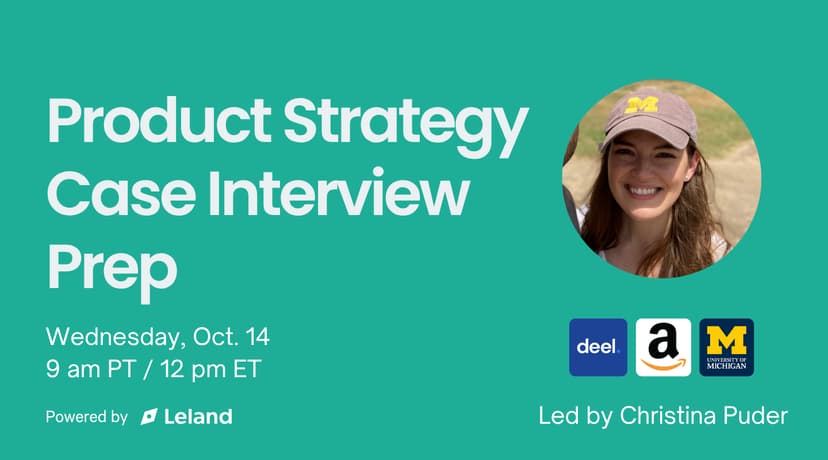 Oct 14, 2026 at 4:00 PM138 registered
 Oct 20, 2026 at 4:00 PM91 registered
 Oct 23, 2026 at 4:00 PM45 registered
 Oct 28, 2026 at 9:30 PM57 registered
Table of Contents
If you're gearing up for a product management interview, whether you're a newbie or looking to land a senior product manager role, choosing the right product manager interview course can make a world of difference.
In this guide, you'll find the top‑rated courses for PM interview prep in 2025, along with what makes them stand out, and actionable advice to effectively prepare and ace interviews for top tech companies.
PS: A product management bootcamp might be just what you need to go from zero to hero in just 8 weeks. These intensive programs are designed to give you the skills and knowledge you need to thrive in this exciting field. With hands-on experience in product analytics, product management tools, and real-world projects, you'll be well-equipped to take on the challenges of this dynamic role.
Read: The Ultimate Product Manager Interview Guide
Why a Dedicated PM Interview Course Matters
Before diving into course picks, let’s clarify why a specialized course beyond generic product management training can help:
The interview format differs from day‑to‑day PM skills. A regular product management course teaches you how to build a product strategy, roadmap, or manage a lifecycle. A good PM interview course teaches you how to articulate that thinking under pressure, answer questions, tackle product sense, estimation questions, and walk through technical questions or case‑style prompts.
Structured mock interviews + feedback accelerate readiness. Many courses offer mock interviews, coaching, and community feedback — invaluable for refining answers, improving body language, honing communication, and building confidence.
Targeted prep for big tech / competitive companies. Interview loops at firms like Google, Amazon, Microsoft, and similar “tech companies” often follow a predictable pattern: product sense, analytics, estimation, behavioral. A focused course can help you practice those again and again.
Bottom line: a good PM interview course helps turn your product‑management knowledge and experience into effective answers under interview pressure, and that’s hard to self‑teach.
How We Chose the Best PM Interview Courses for 2025
To create a truly useful and trusted list, we didn’t just skim marketing pages. We reverse-engineered what actually works for PM candidates landing real offers at top companies like Google, Amazon, Meta, and fast-growing startups.
Here’s what we looked for:
- Proven success with top-tier interviews. Every course on this list has helped candidates actually land PM roles at competitive companies, not just complete the material. We prioritized platforms that share placement data, testimonials, and success stories from candidates who navigated tough interview loops.
- Real-world interview alignment. We only included programs that focus on the full spectrum of PM interview questions: product sense, estimation, behavioral, technical, metrics, and strategy. Courses needed to go beyond theory and into actual frameworks, sample answers, and repeated practice with the question types hiring managers actually ask.
- Expert coaching and feedback loops. Courses had to include mock interviews, structured feedback, or peer review communities because practicing under pressure is how good candidates become great. Passive learning isn’t enough.
- Up-to-date with 2025 hiring trends. The PM role is evolving, especially with the rise of AI/ML product lines, data-centric decision-making, and cross-functional stakeholder complexity. We selected programs that reflect those shifts and prepare candidates for modern product challenges.
- Designed for a range of backgrounds. Whether you're a first-time PM, career switcher, or aiming for a senior product manager position, the courses had to support different experience levels with tailored resources, case studies, and depth of training.
- Validated by community trust. We cross-referenced course reviews, Quora threads, Reddit discussions, and candidate breakdowns to see what’s consistently recommended by people who’ve been through the interview process. If a course helped real candidates stand out, we took note.
Bottom line: these aren’t the “prettiest” or most-advertised courses — they’re the most effective. They reflect what great PM candidates actually use to prepare, practice, and land the job.
Top 5 Product Manager Interview Courses for 2025
The most effective courses for mastering product manager interviews — ranked by real impact, expert support, and alignment with 2025 hiring expectations.
| Rank | Course / Platform | What Makes It Stand Out | Best For |
|---|---|---|---|
| 1 | PM Exercises | The most comprehensive PM interview prep library online, with 3,000+ real interview questions, structured mock interviews, feedback from peers and mentors, and targeted prep for product sense, metrics, estimation, and behavioral interviews. Built-in prep for AI/ML PM interviews and top tech companies. | PM candidates targeting Google, Meta, Amazon, or fast-paced startups. Especially strong for self-motivated learners who want to drill deeply and practice consistently. |
| 2 | Exponent – Product Management Interview Course | Includes interview frameworks, real case breakdowns, coaching sessions with former FAANG PMs, and lessons across product strategy, technical interviews, and stakeholder management. One of the most polished and community-rich platforms. | Mid- to senior-level PMs or career switchers seeking structured interview coaching, community accountability, and insight into real PM interview loops. |
| 3 | UXcel – PM Foundations + Interview Prep | Clean, bite-sized learning modules on core PM skills (product lifecycle, analytics, strategy, and roadmap thinking) with integrated quizzes, visuals, and practical prompts. Affordable and time-efficient. | Early-career PMs, UX/Product Designers, or those transitioning into product from adjacent fields. Great for foundation building + light interview prep. |
| 4 | Product School + University-Backed PM Certificates | Combines end-to-end PM education with interview coaching, real-world product case studies, and often, a recognized certificate. Several programs now include live sessions, mentor access, and career coaching. | Candidates who want a credential + complete PM training experience, especially helpful for building a standout LinkedIn profile and portfolio for hiring managers. |
| 5 | Coursera / Udemy + Self-Directed Mock Interview Practice | Flexible and affordable. Offers everything from short crash courses to full-length specializations (like from Wharton or Northwestern). Combine with free tools (like PMExercises’ free question bank) for DIY interview prep. | Budget-conscious learners or those juggling work/school who want to build PM knowledge at their own pace, and are willing to supplement with mock practice. |
How to Use These Courses to Maximize Your Interview Success
Just enrolling isn’t enough. Here’s a playbook to extract maximum value from your chosen PM interview course:
1. Schedule regular mock interviews + feedback loops. Don’t just passively read interview questions or watch videos. Actively practice and treat it like real interviews. Use community partners or coaches.
2. Simulate real PM interview conditions. Time yourself. Use realistic prompts. Rotate between product‑sense questions, estimation, technical, metrics, and behavioral, just like actual interview loops.
3. Practice structuring answers, not just ideas. For behavioral or “about a time…” questions, use frameworks like Situation–Task–Action–Result (STAR). For product sense or estimation, walk through the problem, define assumptions, outline metrics, and justify trade‑offs.
4. Focus on core PM interview themes:
- Product sense & vision - how you think about user problems, prioritize features, envision product roadmap.
- Analytical skills & metrics - ability to reason using data, define key metrics for product success, and make data‑driven decisions.
- Stakeholder communication & cross‑functional thinking - you’re often judged on communication and strategic alignment.
- Behavioral + leadership - even as a PM, you’ll face leadership, conflict resolution, prioritization, and communication questions.
5. Iterate, reflect, refine. After each mock interview, review feedback, polish your answers, and refine body language and clarity. Use the same cycles that top candidates use.
6. Complement with real project/product thinking work. Courses help you prep for interviews, but nothing beats actual product management experience (side‑projects, open source, freelancing, personal initiatives) to sharpen product sense, strategy, and craftsmanship.
Real Insights from PM Candidates (What People on Quora & Communities Report)
From recent shared experiences on forums and candidate threads:
- “It’s not just about getting the right answer; it’s how you explain your thinking, the clarity of your decision path, how you balance trade‑offs, and how you articulate product strategy under constraints.” This is a common recurring feedback from people who landed roles after trying PM interview prep courses.
- Many candidates struggled with behavioral interviews, especially when asked “about a time you faced conflicting priorities” or “how you handled stakeholder disagreement.” Having practiced through mock interviews and feedback made a big difference.
- For data‑heavy roles, technical questions + metrics reasoning separated strong candidates from average ones; prepping on analytics + reasoning through past project data helped them stand out.
- Consistency matters: practicing 1–3 hours a day over 4–6 weeks (on top of a structured PM interview course) improved confidence, fluency, and readiness significantly.
These real‑world signals show it’s not enough to just passively consume content — active practice and reflection are what turn preparation into job offers.
Which PM Interview Course Is Right for You?
Your ideal prep path depends on your background, goals, and the kinds of interviews you're targeting. Below is a breakdown to help you choose the right course strategy, whether you're pivoting into product management or leveling up for senior roles.
First-time PM or Career Switcher (Non-Technical Background)
If you’re new to product or coming from a non-technical field (e.g., marketing, operations, design), your priority is to build product intuition and communication confidence, then learn how to perform well in structured interviews.
Start with:
- UXcel or similar foundational courses to understand the product lifecycle, roadmap thinking, and stakeholder collaboration.
- Coursera or Udemy for introductions to product strategy, agile, and customer research.
Then add:
- Structured interview prep via PM Exercises or Exponent.
- Focus on mock interviews, storytelling frameworks (e.g. STAR), and clearly articulating product decisions.
Goal: Show that you think like a PM, even without formal experience. Hiring managers want clarity, structured reasoning, and curiosity, not buzzwords.
Tech Background or Data-Centric Experience
If you’ve been an engineer, data analyst, or technical founder, you already bring analytical rigor, but you’ll need to prove your product strategy, user empathy, and cross-functional leadership.
Best bets:
- PM Exercises for heavy practice in metrics, estimation, and product sense.
- Exponent for feedback on communication, customer-centric thinking, and stakeholder alignment.
Goal: Show you can go beyond building the thing right; you know how to build the right thing.
Targeting Big Tech or Senior Product Manager Roles
Top-tier companies and senior roles expect depth: vision, execution, communication, and influence across the org. You’ll face complex case questions, product strategy prompts, and behavioral deep dives.
Use a combination of:
- Product School, Product Faculty, or a university-backed PM certificate to solidify fundamentals and earn a recognized credential.
- High-rep mock interviews through Exponent or paid coaching to refine delivery.
- Real-world product thinking: side projects, MVPs, or consulting work that show you can build, ship, and iterate.
Goal: Demonstrate product leadership. That means structured thinking, clarity, influence, and the ability to own outcomes, not just tasks.
Budget-Conscious or Time-Constrained
If you're balancing a job, school, or other priorities, you can still prep effectively; you just need focus, consistency, and the right mix of free or low-cost tools.
Recommended stack:
- Coursera/Udemy for key concepts and frameworks.
- Free question banks and community practice on PM Exercises.
- Peer mock interviews through Slack groups, Reddit, or Prepfully.
Tactical plan: Set weekly goals: 3 mock interviews, 2 written responses, 1 feedback loop. Track progress like a product.
Goal: Build real fluency with PM interviews, not just surface knowledge. You don't need to spend thousands to prepare; just show up consistently and intentionally.
No matter your background, the formula remains the same:
Product knowledge + Focused practice + Repetitive feedback + Clear communication = PM interview success
The best course is the one that helps you do the reps, sharpen your instincts, and communicate like a decision-maker.
What Top PM Interviewers Are Really Looking For
To stand out in competitive PM interviews, especially at companies like Amazon or Meta, you need more than surface-level preparation. Hiring teams are evaluating how you think, not just what you know. Here's how to prepare strategically and deliver a consistently good answer across formats.
Study real PM interview questions, not just hypotheticals
Many candidates fall into the trap of memorizing generic frameworks. The better approach is to practice using real PM interview questions from past candidates, especially from Amazon interviews, which are known for their behavioral depth and customer obsession focus. Sites like PM Exercises and Exponent provide access to interview banks with expert answers and guided walkthroughs.
Look for questions like:
- “Tell me about a time you disagreed with engineers on product direction.”
- “How would you evaluate two competing product ideas with limited data?”
- “Walk me through a product you launched—what was your product vision and how did it evolve?”
These aren’t just about outcomes; they test your judgment, prioritization, and how well you align product decisions with customer and business goals.
Read: The 50 Most Common Product Manager Interview Questions
Practice like the interview is real
Don’t just review questions. Simulate full mock interviews with a coach or peer. Many top-rated prep platforms offer lifetime access to question banks, mock interview scheduling, and feedback from experienced PMs who’ve worked at big tech companies. Use that to your advantage.
Get used to explaining trade-offs, defending your assumptions, and articulating your product vision under pressure. Great PM interviewers aren’t looking for perfection; they want clarity, structure, and thoughtful reasoning that reflects how you’ll make decisions on the job.
Expert Tips for Transitioning to Your New Career
After completing your product management bootcamp, you're ready to take the next step in your career journey. To make a successful transition, you'll need to focus on three key areas: resume building, interview preparation, and networking strategies.
Resume Building
Your resume is your first opportunity to make a strong impression on potential employers. As a product management bootcamp graduate, you'll want to highlight the skills and experiences you've gained during your training. Focus on creating impact statements that showcase your accomplishments and quantify your results whenever possible.
For example, instead of simply listing tasks, you could say, "Led design and development team from implementation through launch of an office map app that increased on-time meetings by 75%."
When crafting your resume, tailor it to each specific job application. Include keywords and phrases from the job description to show that you're a good fit for the role. Don't forget to emphasize any relevant projects or certifications you completed during your bootcamp, as these can set you apart from other candidates.
Look: The Ultimate Career Resume Guide + Examples
Interview Prep
Preparing for interviews is crucial to landing your dream product management role. Start by researching the company, its products, and the people you'll be meeting with during the interview process. This knowledge will help you frame your responses and demonstrate your genuine interest in the position.
Practice answering common product management interview questions, focusing on behavioral and case-style scenarios. Use the STAR method (Situation, Task, Action, Result) to structure your responses and provide concrete examples of your skills in action. Consider conducting mock interviews with peers or mentors to gain confidence and receive valuable feedback.
Networking Strategies
Building a strong professional network is essential for success in product management. Start by connecting with your bootcamp classmates and instructors, as they can be valuable resources throughout your career. Attend industry conferences and events, such as ProductCon, to meet other professionals and stay updated on the latest trends.
Join online communities, such as the Product School Slack community, which has over 100,000 product managers. This platform offers opportunities to participate in AMA sessions, connect with local PMs, and find answers to product management-related questions.
Don't underestimate the power of informational interviews. Reach out to professionals in product management whose career paths you admire and request brief meetings to learn from their experiences. These conversations can provide valuable insights and potentially lead to job opportunities.
Do you want to gain valuable product management skills? We got you covered! Here are a couple of articles about product management skills to help you:
- The 20 Most Important Product Manager Skills
- Do You Need Technical Skills to Be a Successful Product Manager?
Final Verdict: Combine Smart Courses + Real Practice + Mindful Prep
If your goal is to not just learn product management, but ace product management interviews (especially at top tech companies), the winners are clear:
Use a dedicated PM interview course like PM Exercises or Exponent. Practice mock interviews over weeks, don’t just read questions, simulate real interview conditions. Double down on product sense, data-driven thinking, and behavioral fluency. And augment with real or side‑project product work to show actual product management experience
A course alone isn’t magic. But the right course + disciplined prep + authentic product thinking can dramatically tilt the odds in your favor.
Work With A Top Product Management Coach
If you want expert feedback, strategy refinement, or help navigating specific company interviews, work 1:1 with a top product management coach here. They’ll help you craft standout answers, run live mock interviews, and accelerate your readiness, so you're not just prepared, you're confident. Also, join product management bootcamps and free events to unlock your full PM potential!
Read next:
- 20+ Free Product Management Resources
- The Ultimate Guide to Product Manager Portfolios (With Examples)
- The Product Execution Interview: Ultimate Guide (With Common Questions)
- The 50 Most Common Product Manager Interview Questions (With Sample Answers)
- Product Manager Resources: Books, Courses, and Communities for PMs
- Technical Product Manager (TPM): Interview Process & Questions
- Product Marketing Manager Resume Guide [With Example & Template]
FAQs
Is a product manager interview course really worth the investment?
- Yes, especially if you're new to PM interviews or targeting competitive companies. The structure, mock interviews, and curated question banks give you a huge advantage over self-study.
Can you land a PM job just by taking a course?
- Not by itself. Courses are tools, and you still need to practice, do real product‑thinking work, build a portfolio, and prepare thoroughly. But done right, courses + consistent prep + real‑world experience significantly increase your odds.
How many weeks of prep are enough?
- Based on community feedback and course creators, 4–6 weeks of consistent prep (1–3 hours per day) with regular mock interviews tends to give good outcomes.
Should I do behavioral + technical prep?
- Absolutely. Most product management interviews combine both behavioral questions, product sense (strategic + user‑focused), analytics, and occasionally technical or data questions.