GMAT Data Insights: Practice, Examples, & Tips
Learn how to approach GMAT data insights practice questions with examples, question-type breakdowns, and effective timing strategies.
Posted March 20, 2026




Table of Contents
Effective GMAT Data Insights preparation starts with understanding how the section is structured and what each question is actually testing. The GMAT Data Insights section is part of the GMAT Focus Edition and is designed by the Graduate Management Admission Council (GMAC) to measure how well you analyze data, evaluate information, and make decisions quickly.
This article explains how the GMAT Data Insights section works, how each question type should be approached, and how to practice in a way that improves accuracy and pacing under real test conditions.
Read: What is a Perfect GMAT? Highest Possible Score
What Is the GMAT Data Insights Section?
The GMAT Data Insights section replaces the Integrated Reasoning section from earlier versions of the exam. It appears as one of the three sections on the GMAT Focus Edition, alongside Quantitative and Verbal.
This section evaluates how well you analyze and apply information. Questions present data in tables, charts, text passages, and multiple sources, requiring you to interpret information, identify what matters, and make sound decisions under time pressure.
While many DI problems look complex at first glance, success depends on structured reasoning and careful data evaluation rather than lengthy calculations.
Read: Average GMAT Score by School: Business Schools Ranking
Format of the Data Insights Section
The Data Insights section consists of 20 questions completed in 45 minutes. It does not reward advanced math. Instead, it tests accurate data interpretation, relevance filtering, and disciplined decision-making. Questions combine tables, charts, text passages, and multiple data sources, often requiring you to evaluate information rather than calculate precise values.
Types of questions include:
- Data Sufficiency Questions
- Multi-Source Reasoning Questions
- Table Analysis Questions
- Graphics Interpretation Questions
Skills the Section Measures
The GMAT data insights section measures several core skills used in graduate management programs:
- Your ability to analyze the information provided
- Identifying relevant data while ignoring distracting or incomplete information.
- Your ability to determine whether there is enough data to answer a question
- Your decision-making skills when faced with time limits
- Your ability to solve complex problems using structured reasoning
These skills reflect how you will evaluate data, draw conclusions, and make decisions in business school and beyond. These are also the same analytical skills expected in case discussions and data-driven coursework in business school.
Understanding GMAT Data Insights Question Types
Each data insights question type tests a different set of concepts. Knowing how each type works helps you practice with purpose and avoid common mistakes.
Data Sufficiency
Data Sufficiency questions ask whether the given information is sufficient to answer a question, not what the final answer is. Each problem presents a question followed by two statements, labeled (1) and (2). Your task is to determine whether statement (1) alone, statement (2) alone, both together, or neither provides enough information to answer the question. The answer choices follow a fixed GMAT format.
This question type rewards structured thinking and discipline. You evaluate whether the information provided resolves the question, not whether you can fully solve it, unless calculation is required to test sufficiency.
Table Analysis
Table Analysis questions present information in a sortable table. You may need to sort columns, scan rows, and compare values to evaluate each statement or option. These questions test your ability to interpret structured data efficiently under time pressure. The challenge is identifying relevant information. Answers are typically selected using drop-down menus, and accuracy depends on careful reading, precise sorting, and avoiding assumptions.
Graphics Interpretation
Graphics Interpretation questions present data through charts and graphs. These may include bar charts, line graphs, or scatter plots. You are asked to identify trends, compare data points, or determine values based on the visual information provided. The focus is accurate visual interpretation, not advanced math. Answers are often selected using drop-down menus, and success depends on reading graphs carefully and translating visual data into correct numerical or verbal conclusions.
Two-Part Analysis
Two-Part Analysis questions require solving two related tasks from one prompt. You select one answer for each part from a shared option set, and both must be correct to earn credit. The tasks may involve math, logic, or verbal reasoning, depending on the question. Answers are usually chosen from a shared set of options, with one selection per part. The best approach is to separate the prompt into two clear targets, solve each one, then verify your selections work together and match the conditions in the question.
Multi-Source Reasoning
Multi-Source Reasoning questions present information across multiple tabs or panels. Each source may contain text, data, or a combination of both. You must evaluate the information collectively to answer each question accurately. These questions test your ability to integrate verbal and numerical information. Success depends on staying organized, tracking where key details appear, and avoiding unnecessary back-and-forth between sources.
How to Practice GMAT Data Insights Questions Effectively
Strong performance on GMAT data insights questions comes from targeted practice, not random repetition. You need a clear process for how you practice and review each question.
Practice by Question Type
Start by practicing one question type at a time. This helps you learn the structure, common traps, and best approach for each format. Once you feel comfortable with individual types, mix question types to simulate the exam. This approach builds confidence and improves adaptability.
Use Official and Trusted Sources
Official questions from the GMAT exam remain the best reference for style and difficulty. Third-party resources can help when used carefully. Many test takers use platforms like GMAT Club to review explanations and see how others approach problems. Resources such as e-GMAT also offer structured practice sets. When using these sources, focus on understanding the reasoning process rather than memorizing steps.
Review for the Process
After each practice set, review both correct and incorrect answers. Ask yourself:
- Did you identify the relevant information quickly?
- Did you misread the question?
- Did you spend too much time on complex calculations?
This review process helps you refine your approach and maintain a steady pace.
Real Examples and How to Think Through Them
Examples help you apply concepts in real situations. The goal is not just to reach the correct answer, but to understand why that answer works.
Data Sufficiency Example
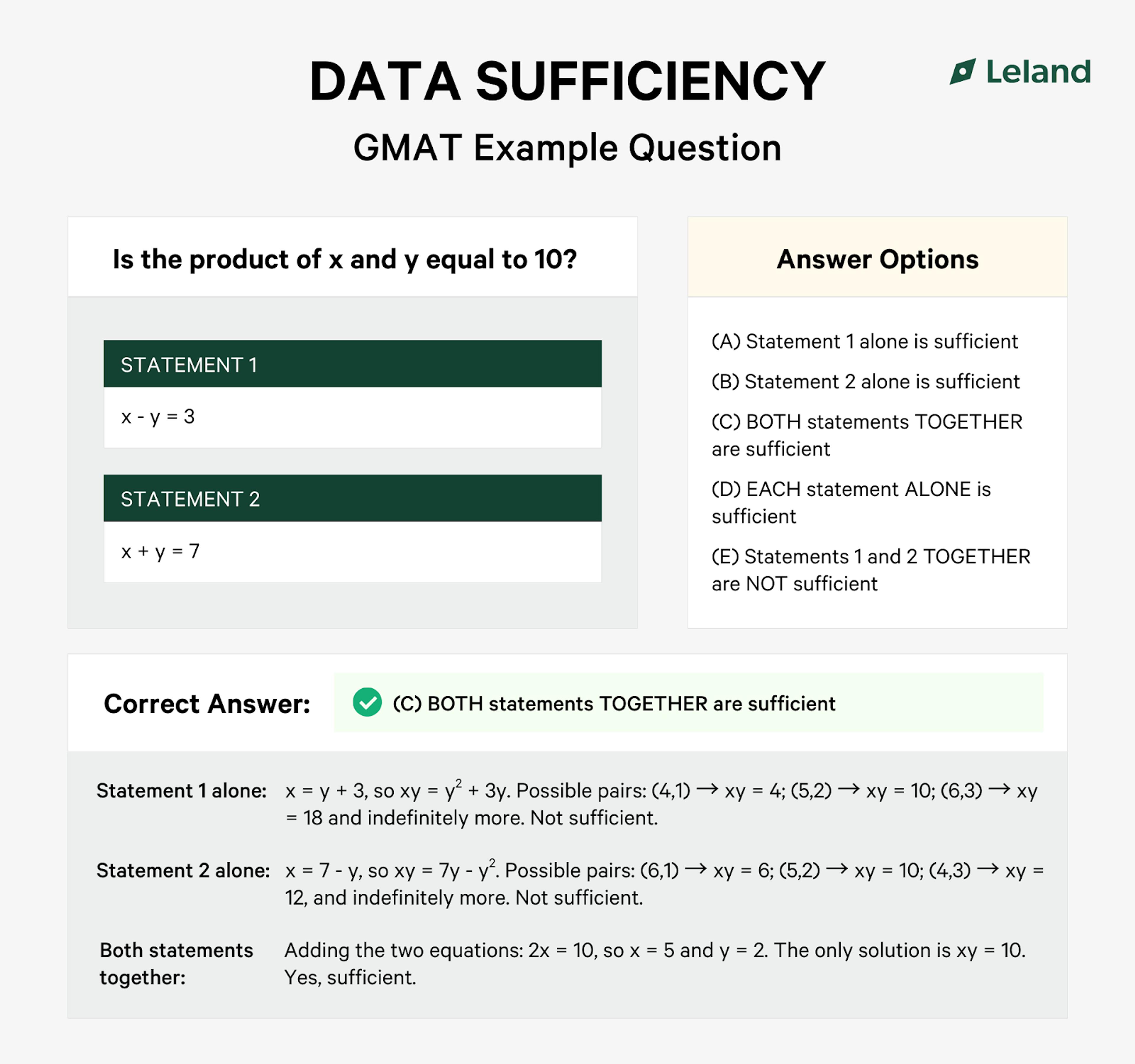
You are given a question and two statements. Instead of solving fully, you test each statement to see if it provides enough data. If statement one allows you to determine the answer on its own, you do not need statement two.
Table Analysis Example
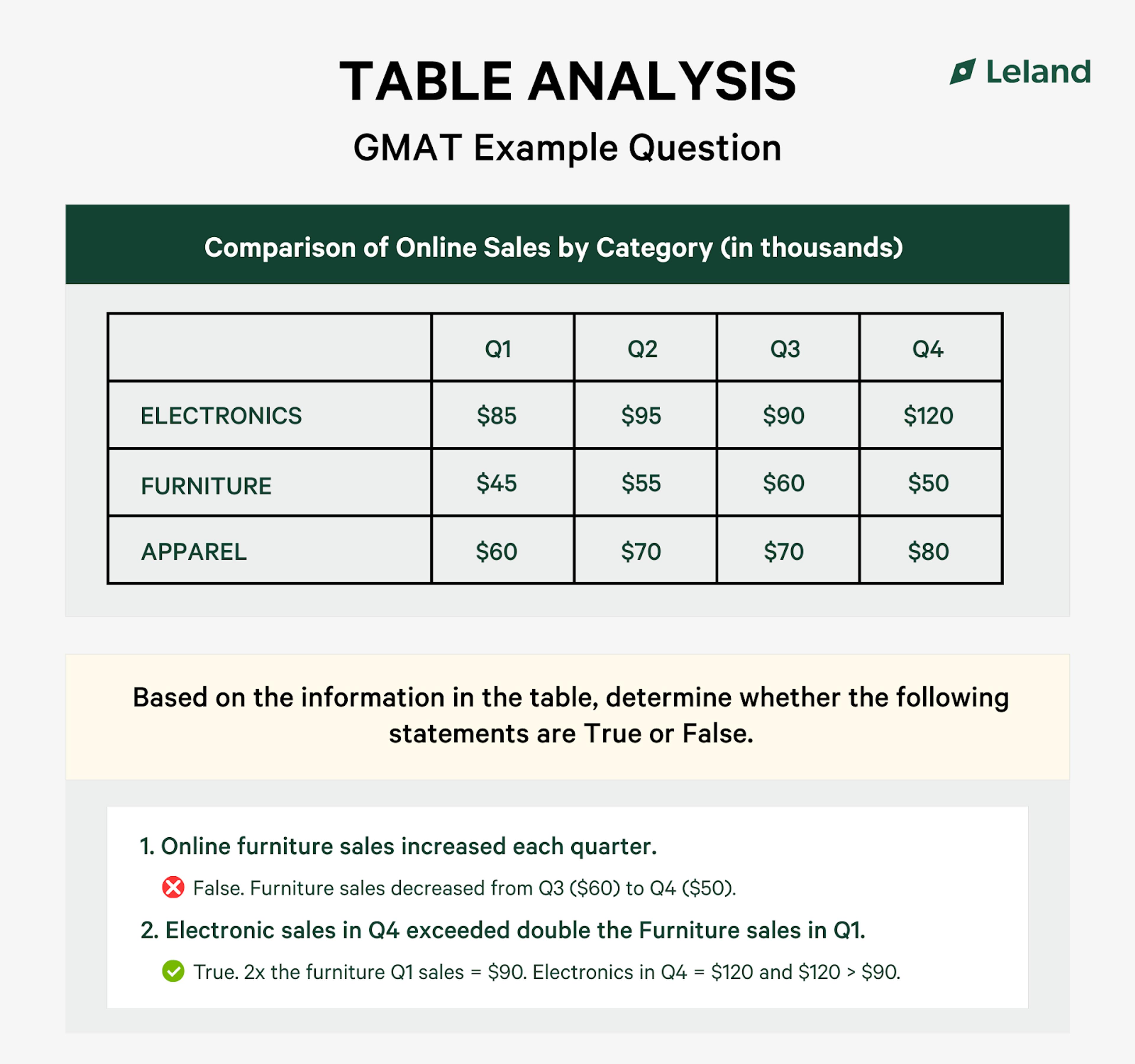
You receive a table with multiple rows and columns. Start by reading what the question asks. Then scan the table to identify which columns contain relevant data. Avoid reading every cell. Focus only on the information needed to answer the question correctly.
Multi-Source Reasoning
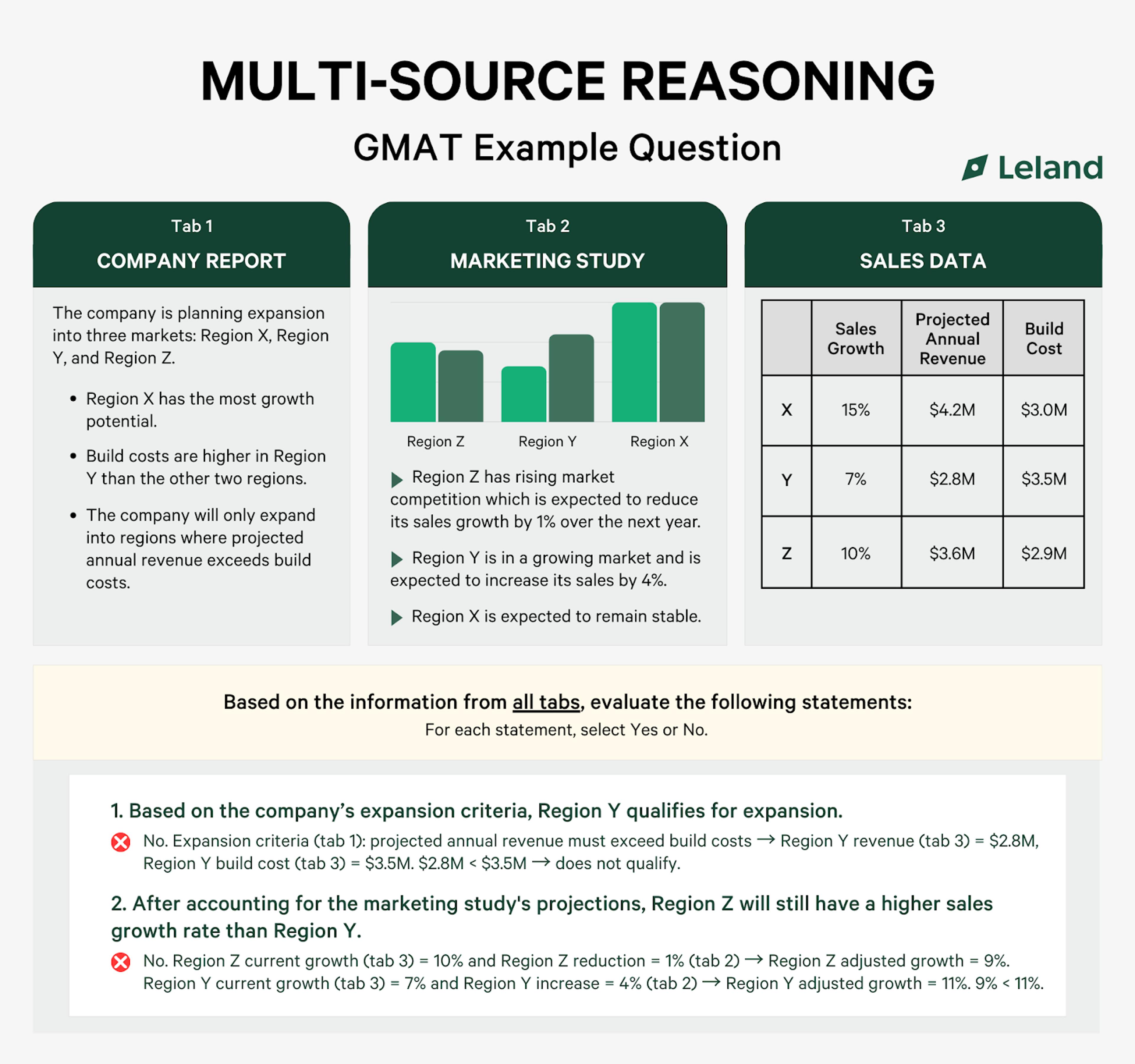
To ace Multi-Source Reasoning questions, start by identifying which source answers which type of question. Go straight to the source when you need it. Check every answer against at least two details from different sources. Avoid choices that rely on assumptions or outside knowledge. This way, you stay accurate and confident under time pressure.
Two-Part Analysis Example
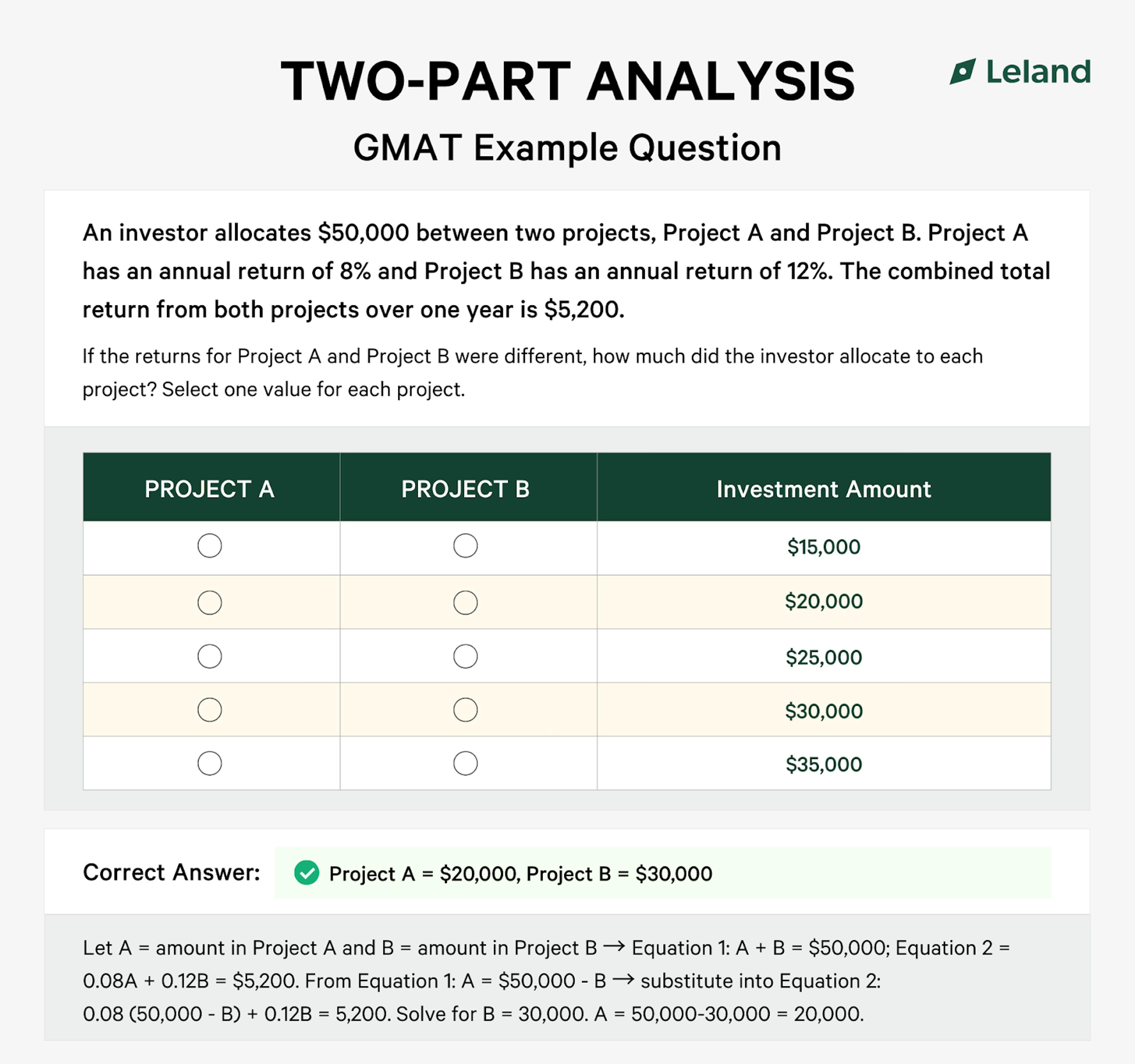
Break the problem into two parts. Solve the first part and note possible answer choices. Then solve the second part and check which pair satisfies both conditions. This structured approach prevents mismatched answers.
Time Management and Test Strategy
Time pressure affects decision quality. You need a clear plan for how long to spend on each task.
Maintaining a Steady Pace
Aim to move efficiently through questions without rushing. If a problem becomes too complex, make a reasoned guess and move on. A steady pace across the section is better than perfect accuracy on a few questions.
Knowing When to Move On
If you cannot determine a clear path to the answer within a reasonable time, select the best option based on available data and continue. This protects your overall score.
GMAT Data Insights Study Plan (6 Weeks)
Below is a six-week study plan designed to structure your review effectively.
| Week | Focus Area | Objectives | Daily Tasks | Tips |
|---|---|---|---|---|
| 1 | GMAT Data Insights Question Types: Data Sufficiency & Table Analysis | Understand the structure, logic, and common traps in Data Sufficiency and Table Analysis questions | Practice 5-10 GMAT Data Insights questions per day per type (2-3 days each). Track mistakes and reasoning errors in an error log. | Review video explanations after practice to improve your reasoning process, not just correct answers |
| 2 | GMAT Data Insights Question Types: Graphics Interpretation, Two-Part Analysis, Multi-Source Reasoning | Learn how to interpret charts, analyze multiple data sources, and break down multi-step problems | Follow the same daily structure as Week 1. Focus on understanding data patterns and logical steps for each question type. | Create a repeatable approach or framework for each GMAT Data Insights question type |
| 3 | Mixed GMAT Data Insights Sets + Accuracy Training | Improve accuracy across all Data Insights question types and reduce careless mistakes | Complete 10-12 mixed GMAT Data Insights questions daily with light timing (around 2 minutes per question). Review every answer in detail. | Use your error log to identify patterns and fix weak areas by question type |
| 4 | Timed GMAT Data Insights Practice + Strategy Development | Build pacing strategies and improve performance under timed conditions | Complete one full GMAT Data Insights section (45 minutes) every other day. Analyze timing, accuracy, and decision-making after each session. | Classify questions as easy, medium, or hard to improve your time management strategy |
| 5 | Full-Test Integration | Integrate Data Insights with Quant and Verbal sections to simulate real exam conditions | Take 1-2 full GMAT Focus practice tests. Target an average of about 2.25 minutes per Data Insights question. Review performance thoroughly. | Use practice test analytics to identify consistent weaknesses and adjust your study plan |
| 6 | GMAT Data Insights Refinement + Final Review | Strengthen weak areas, improve confidence, and finalize your test strategy | Re-practice weak question types, redo missed questions, and complete light daily review sets | Refine your pacing strategy by deciding when to guess, skip, or spend extra time on a question |
Common Mistakes in the Data Insights Section
Many errors in the GMAT data insights section come from avoidable habits:
- Using irrelevant information instead of focusing on the question asked
- Rushing through graphical data without checking units or labels
- Spending too much time on one question and losing your steady pace
- Treating multi-part questions as independent when they are linked
Awareness of these patterns helps you adjust your approach early.
The Bottom Line
Strong results on GMAT data insights practice questions come from consistent practice, clear analysis, and a repeatable process. By understanding each question type, reviewing mistakes carefully, and managing time well, you build the skills needed to excel on the exam.
Take the Guesswork Out of Your GMAT Prep
You’ve learned how the Data Insights section works. Now, it’s time to put that knowledge into action. Whether you’re aiming for a 700+ score or just trying to build confidence with multi-source reasoning and table analysis, personalized support can make the difference.
Leland connects you with top GMAT coaches, many of whom scored in the 99th percentile and have helped hundreds of applicants reach their target scores. Browse them all here. You can also access our free events and bootcamps to further build your knowledge.
Top Coaches
Read these next:
- GMAT Focus Word Problems: Tips & Practice
- GMAT Fee Waiver: How It Works and Who Qualifies
- Best Free & Paid GMAT Verbal Prep for Top Scores
- What to Bring to the GMAT: A Complete Test Day Checklist
- 5 Expert-Approved GMAT Verbal Tips to Increase Your Score
FAQs
How to practice data insights for GMAT?
- To practice Data Insights for the GMAT, focus on one question type at a time using official GMAT-style questions. Review your mistakes carefully to improve your reasoning process, data interpretation skills, and timing accuracy.
What is a 70% on the GMAT?
- The GMAT does not use percentages. Instead, GMAT scores are reported on a scaled score range, so performance is measured by your total score and percentile ranking rather than the number of correct answers.
Is getting 750 in GMAT tough?
- Yes, getting a 750 on the GMAT is very difficult. On the classic GMAT, a 750 score placed you in the top percentile of test-takers, and achieving an equivalent score on the GMAT Focus Edition remains highly competitive.
Is 535 a bad GMAT score?
- A 535 GMAT score is below the average for top MBA programs. However, it may still be acceptable depending on your target schools, work experience, GPA, and overall application profile.