GRE Vocabulary List: 100 Essential Words to Know
Strengthen your GRE vocabulary with essential words and clear definitions, plus smart study tips to boost your verbal score.
Posted February 5, 2026




Table of Contents
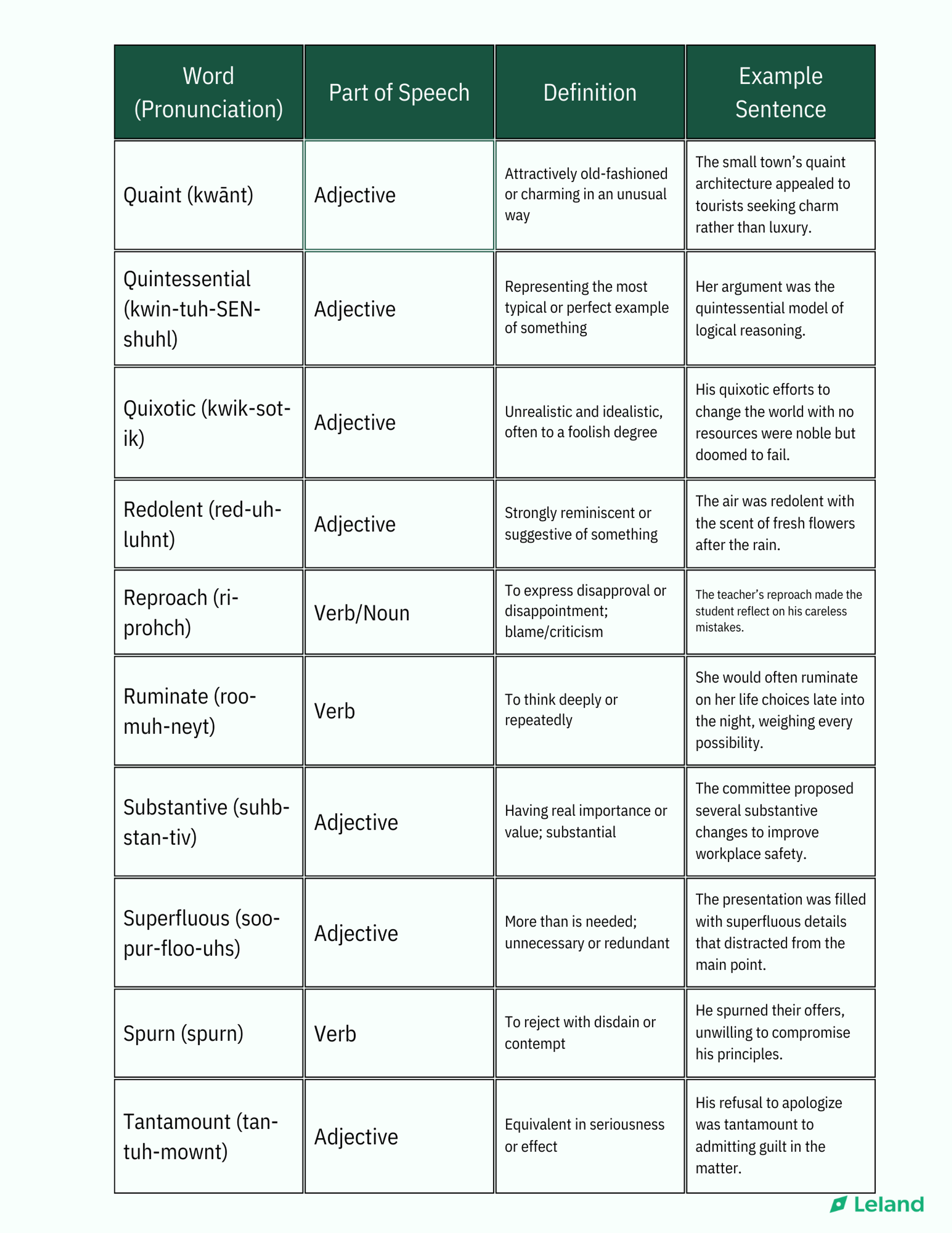
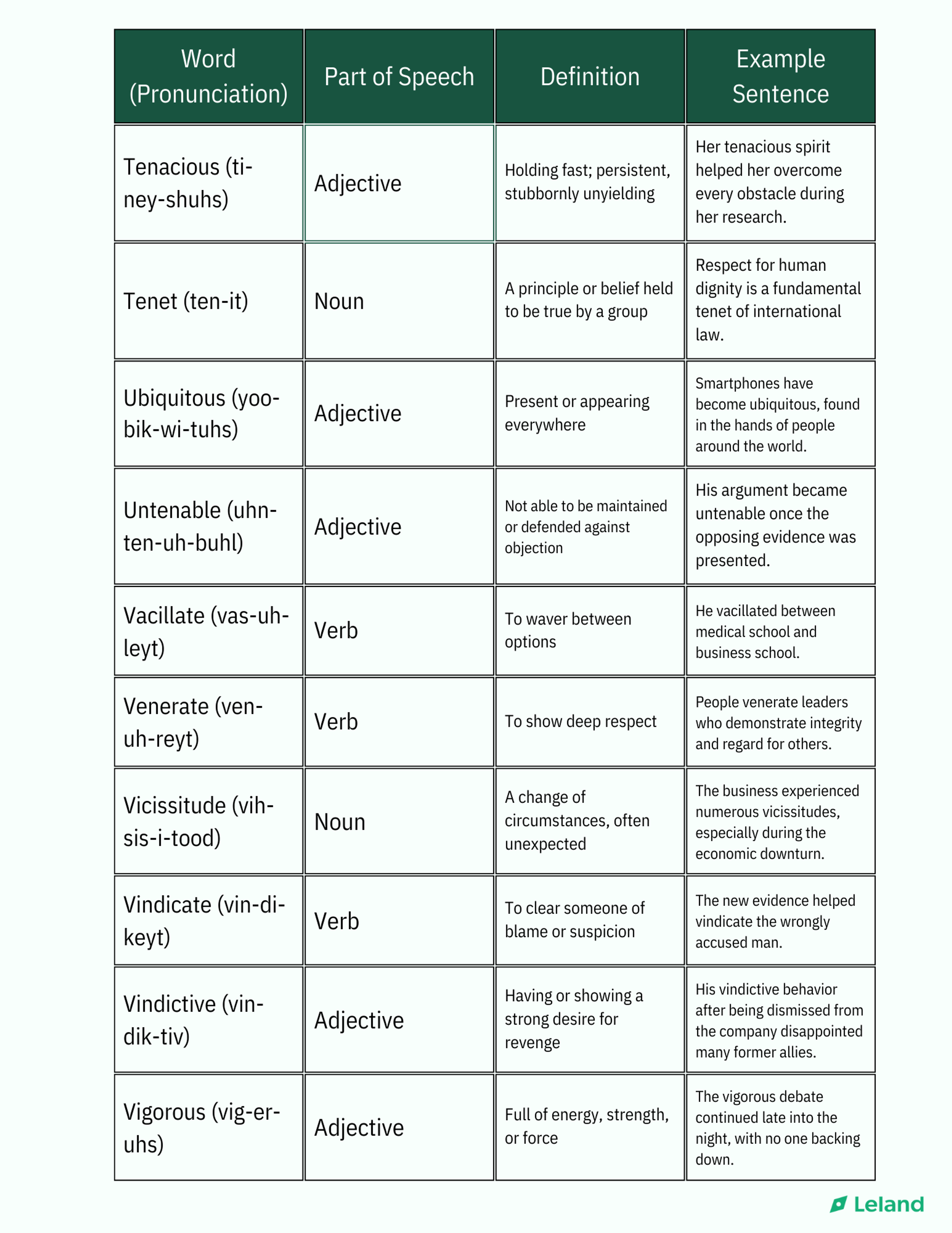
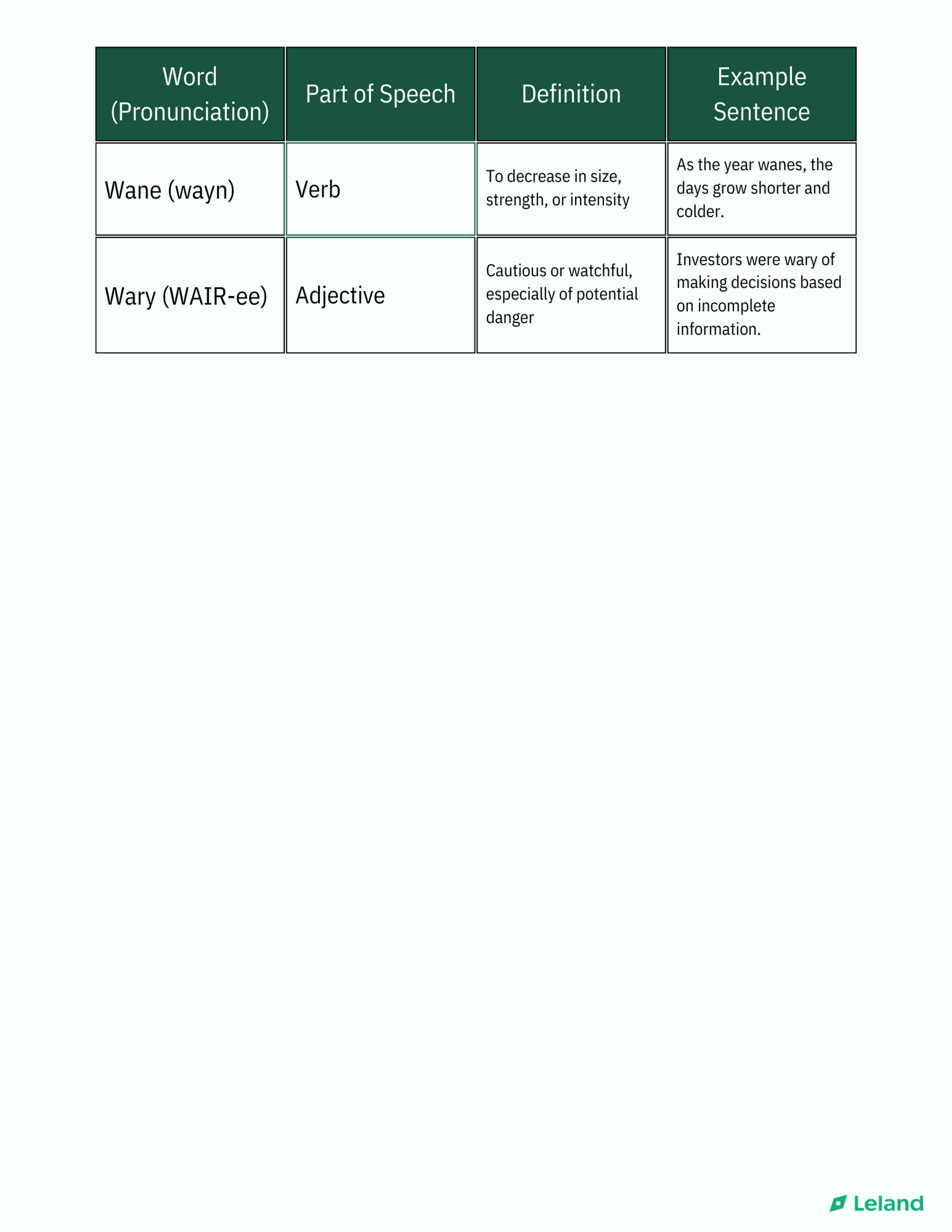
As a student preparing for the GRE, one of the most important aspects of the verbal reasoning section is having a strong vocabulary. Whether you're taking the test for the first time or looking to improve your score, mastering GRE vocabulary words is crucial for success. Learning using the GRE vocabulary flashcards will help you to be able to handle questions related to text completion, sentence equivalence, and reading comprehension more effectively.
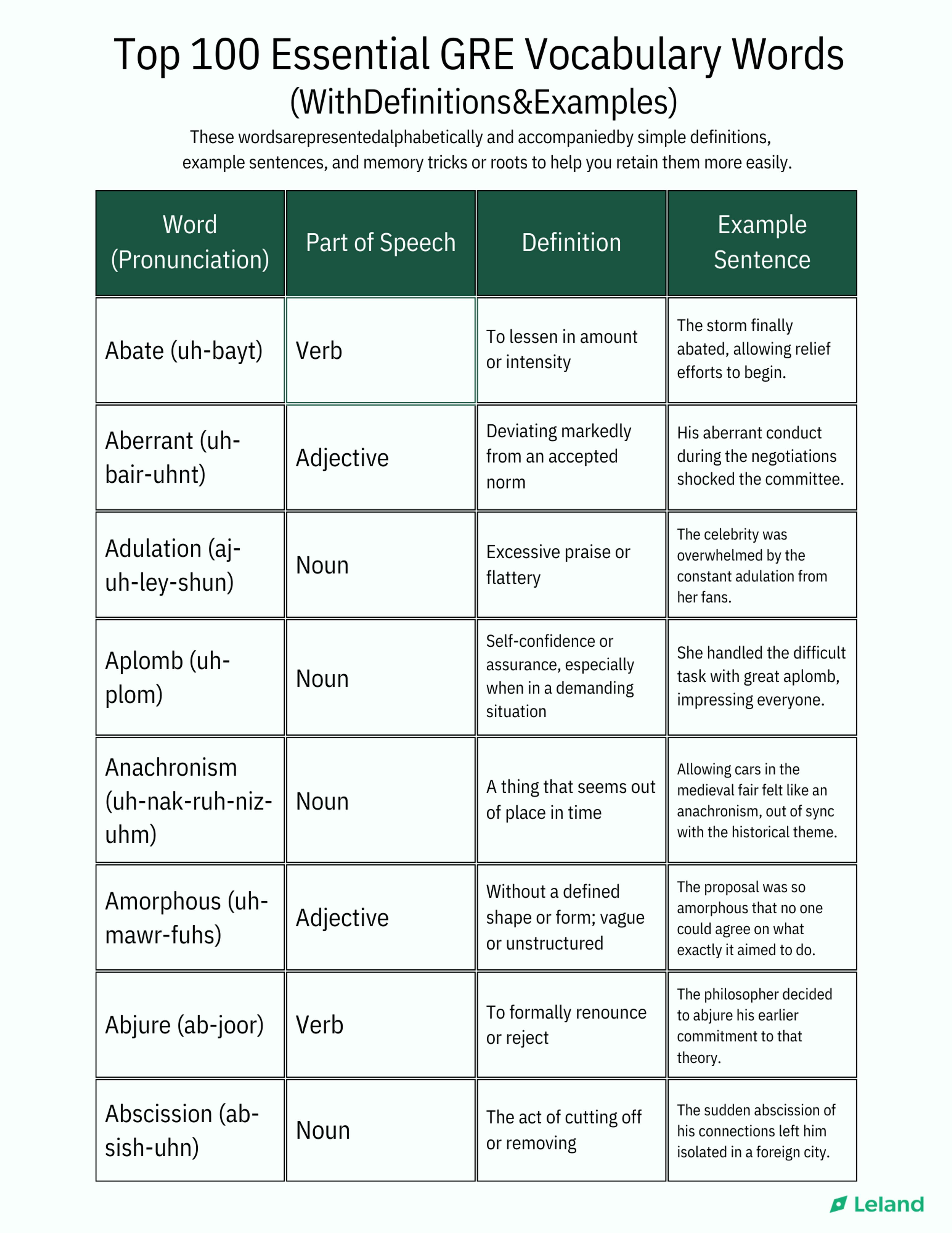
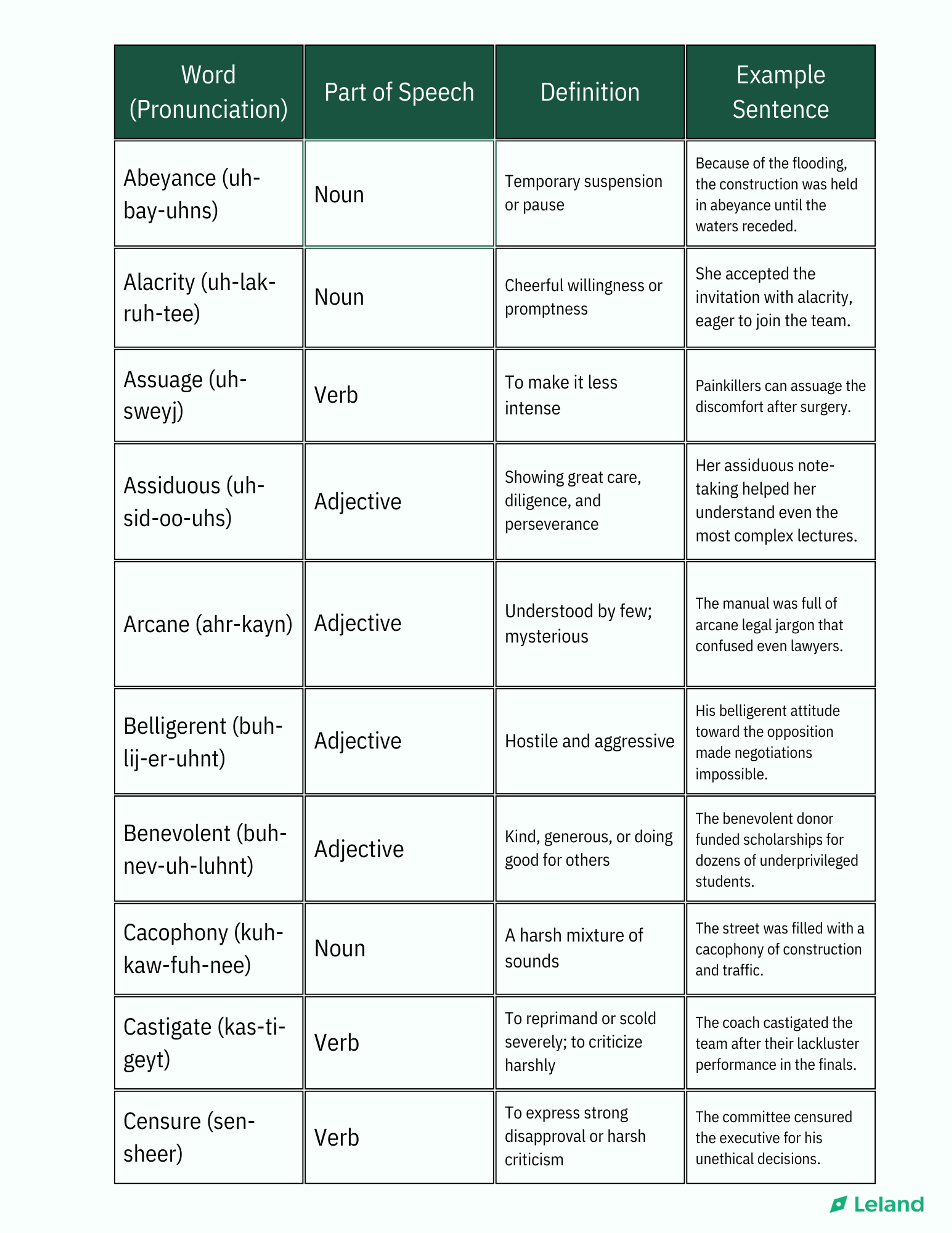
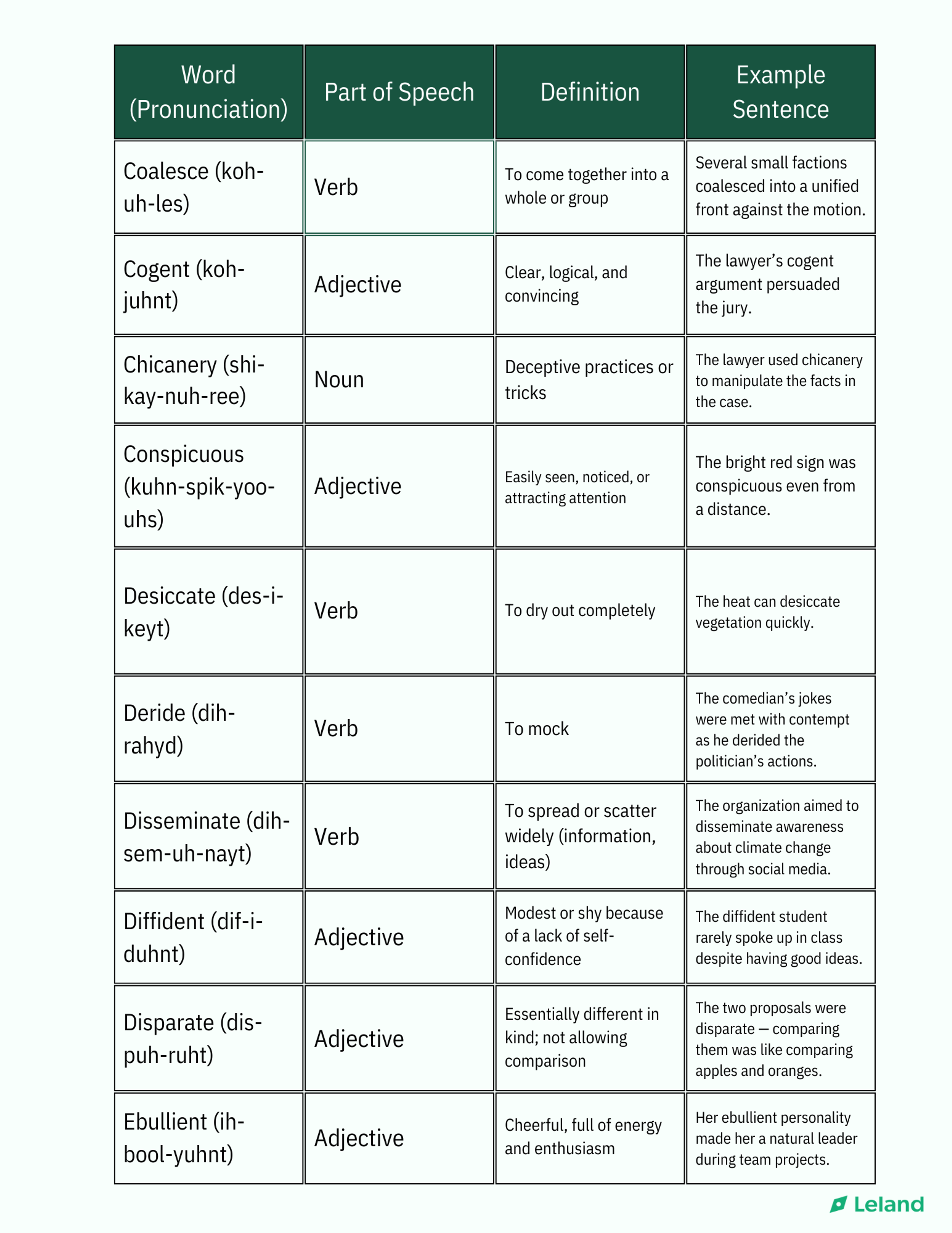
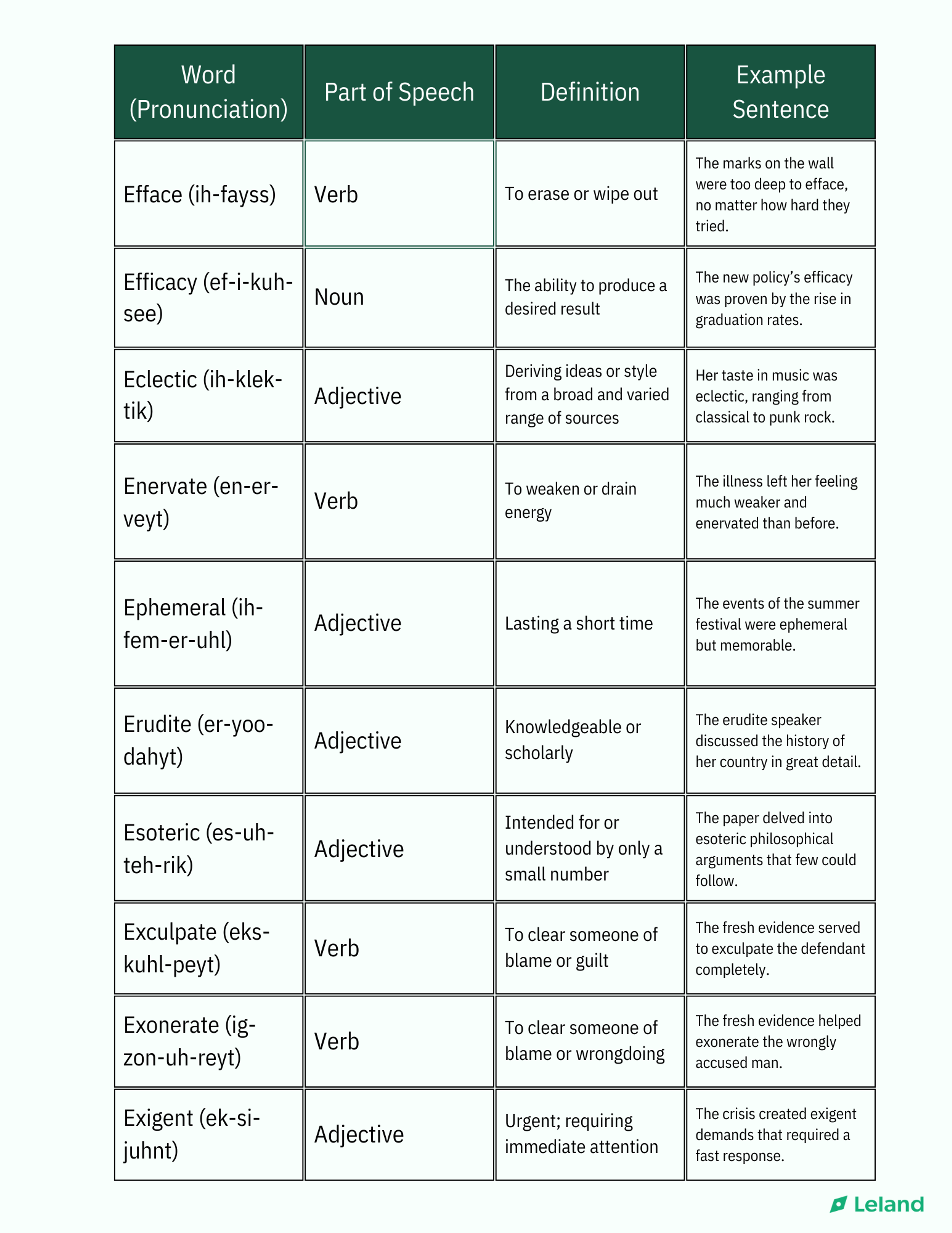
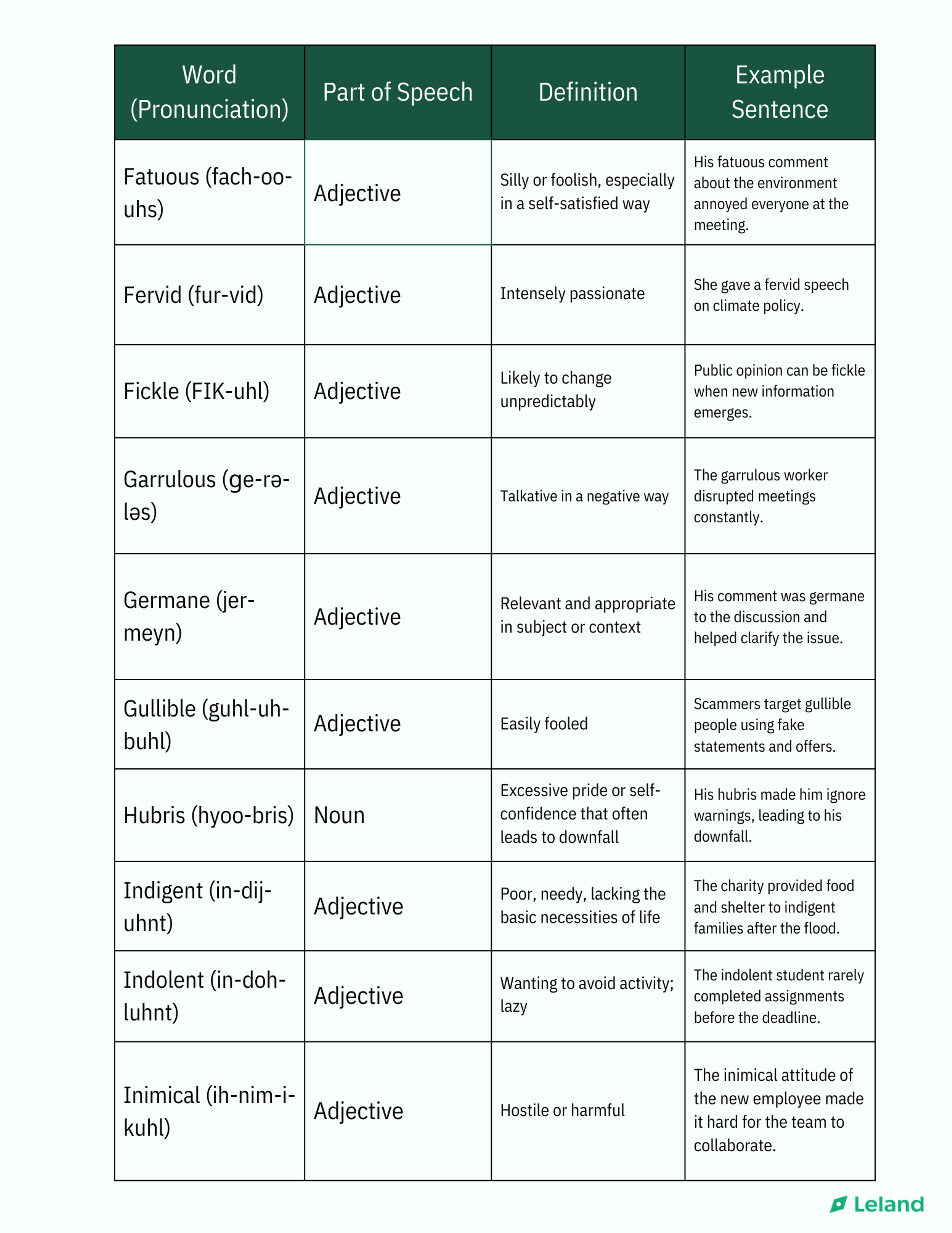
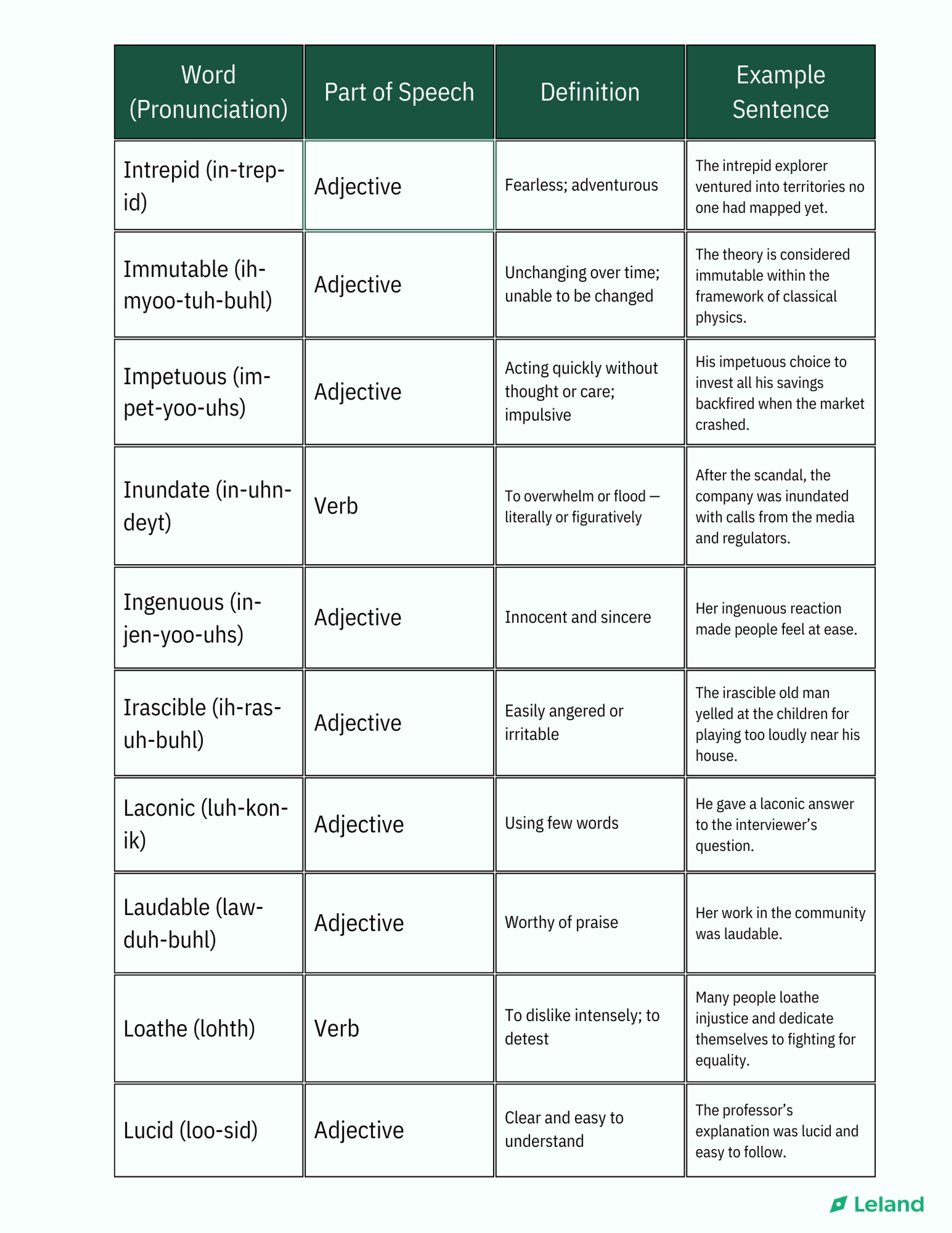
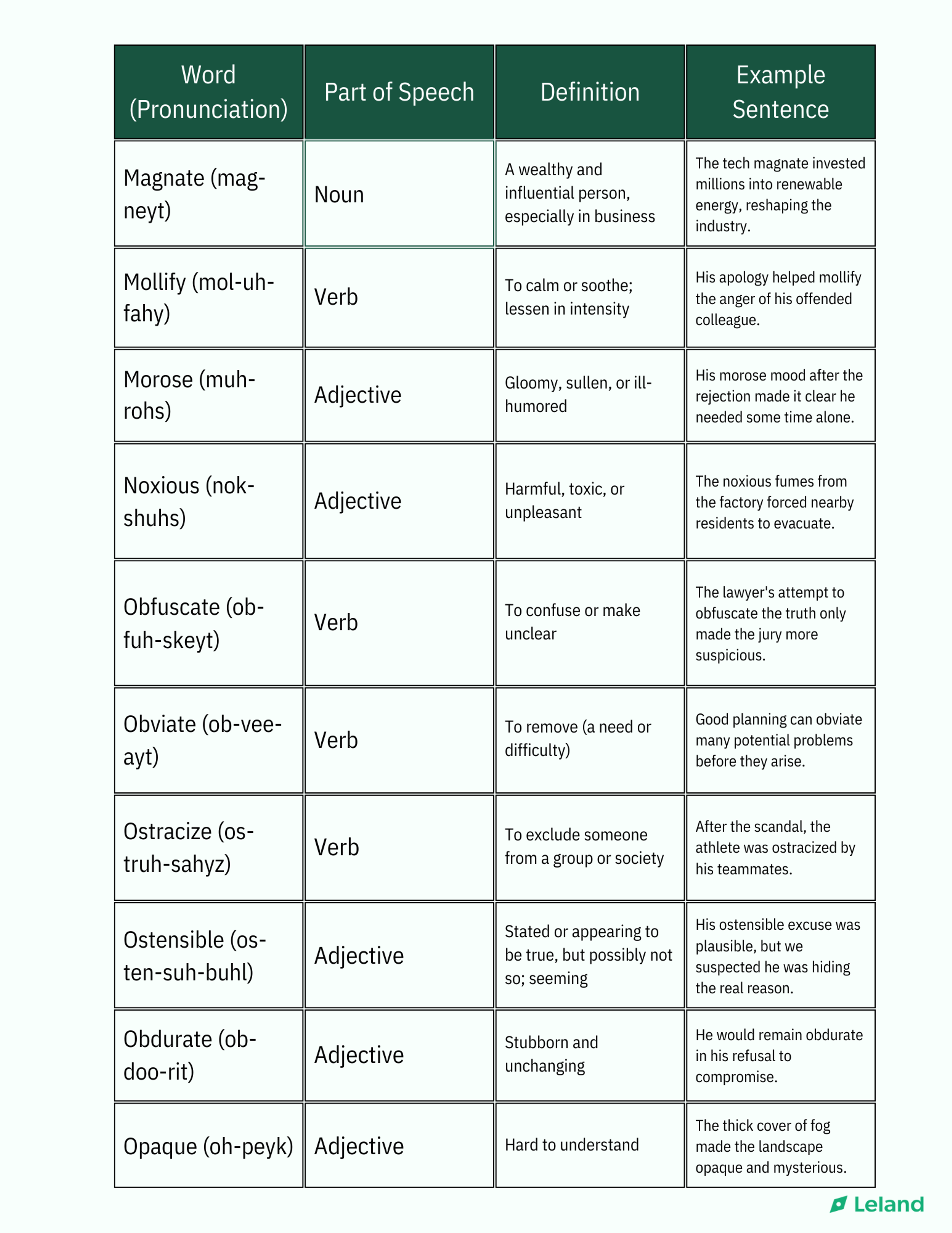
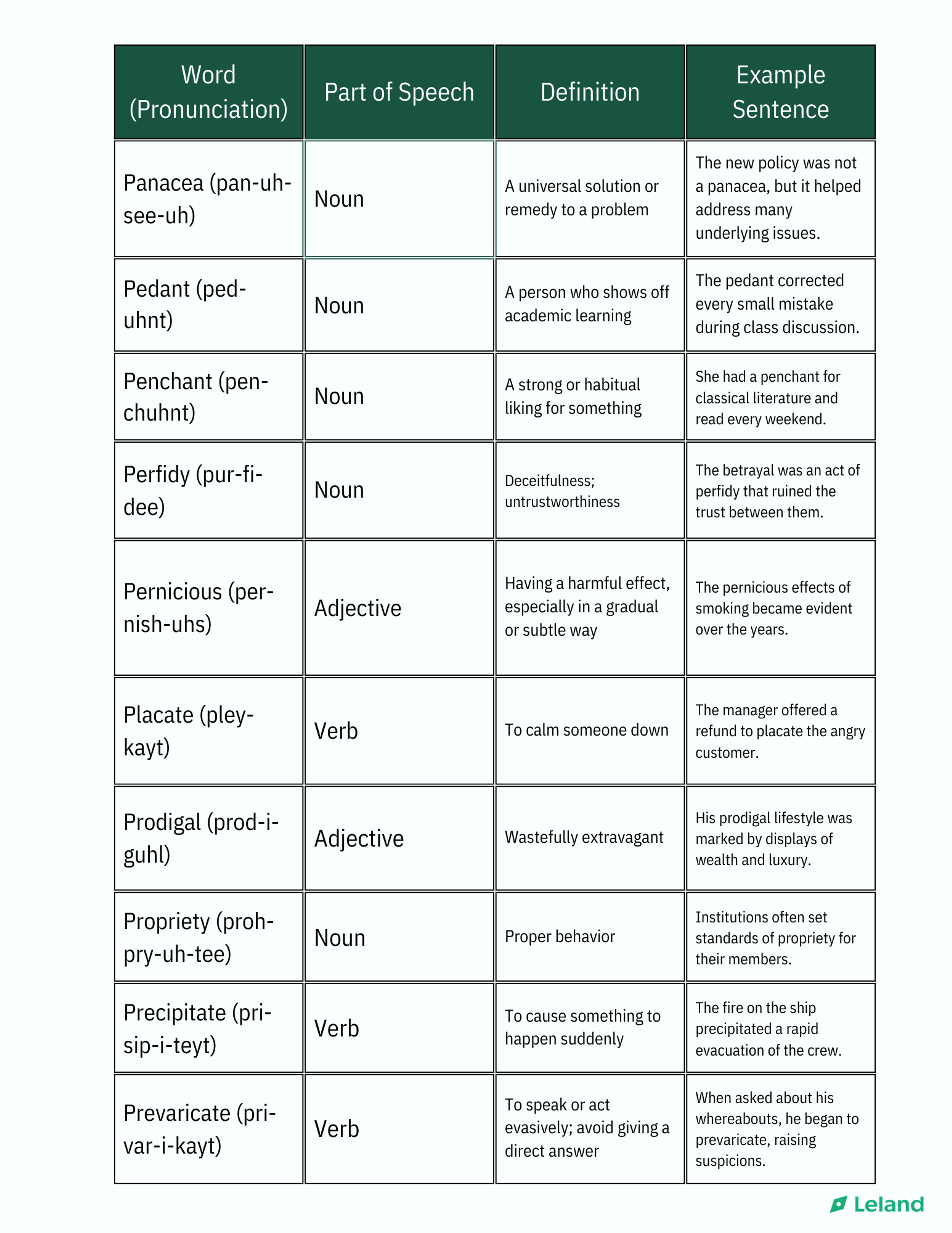
In this guide, a list of 100 essential GRE vocabulary words was put together. We'll break down how to efficiently use these words in context, help you avoid common mistakes, and show you practical ways to integrate them into your GRE practice. Let's get started.

Why GRE Vocabulary Matters More Than You Think
Vocabulary is at the heart of the GRE Verbal Reasoning section. With up to 70% of verbal success riding on understanding and applying high-frequency GRE vocabulary words, vocabulary knowledge can often be the difference between a good score and an outstanding one.
How ETS Tests Meaning-In-Context, Not Lists
ETS, the organization behind the GRE, doesn’t just test whether you can memorize word definitions. They assess your ability to understand words in context, how you use these words to convey meaning, evaluate tone, and derive inferences from complex reading passages. In other words, GRE vocabulary flashcards are an essential tool not only for increasing word recall but for understanding how these words function in a test context.
Common Misconceptions About “Hard” GRE Words
There are also misconceptions about hard GRE words. Many test-takers believe they need to memorize obscure, complex words. However, GRE vocabulary focuses on words that are commonly used in academic contexts and have high frequency in the exam. Knowing a few key words, understanding their meanings, and being able to use them in context can significantly improve your score.
By mastering the core GRE vocabulary, you can give yourself an edge, particularly in sentence equivalence and text completion questions. In both question types, knowing how to assuage or placate a situation with the right word is a crucial skill for success.
How GRE Vocabulary Is Tested (With Examples)
GRE vocabulary doesn’t just test isolated definitions. It evaluates how well you can use vocabulary words in the context of complex academic passages and logical reasoning tasks. Let’s break down how vocabulary is tested across the different verbal reasoning question types.
Text Completion
Text completion questions test your ability to use vocabulary within a passage. You’ll be presented with a passage that has one or more blanks, and you must choose the word(s) that best complete the sentence, considering both the meaning and tone.
For example:
Sentence: The misanthrope was known for his intense ____ of human behavior, and his contempt for the community led him to avoid social interactions entirely.
Answer Choices:
- A) harmony
- B) enthusiasm
- C) respect
- D) contempt
- E) admiration
Correct Answer: D
In this case, the word "misanthrope" (a person who dislikes or avoids humanity) should immediately signal that the correct answer is contempt.
Expert Tip: To easily determine the correct answer in this type of question, always look for context clues within the sentence. These clues can be emotional tone, contrasting ideas, or logical connections that hint at what the blank should convey.
Sentence Equivalence
In sentence equivalence questions, the GRE tests your ability to recognize two words that can fill in a blank to complete a sentence while maintaining logical consistency. The key challenge here is choosing synonyms that make sense within the passage’s context.
For example:
Sentence: The CEO's decision to ____ the company's employees caused a stir within the organization.
Answer Choices:
- A) praise
- B) scorn
- C) placate
- D) praise
- E) critique
In this case, both praise and placate would logically fill the blank and make sense. The sentence structure, however, clues in that both words convey a similar intent of offering support or respect to employees.
This is how flashcards can help reinforce your ability to identify synonyms or words with similar meanings.
Reading Comprehension
Reading comprehension questions assess your understanding of passages that may include complex GRE words. The vocabulary within the passage impacts your ability to understand tone, inference, and the author’s perspective.
For example, a passage might describe a business executive’s speech to employees, using words like desiccate (to dry out or dehydrate) or misanthrope (a person who dislikes people). To answer questions accurately, you must be able to understand the vocabulary and its usage in context.
Word Roots, Prefixes & Suffixes That Unlock Hundreds of GRE Words
Understanding the roots of words can save you time and energy in memorizing definitions. When you learn a root, you unlock the meanings of multiple GRE words that share the same origin. Here are some of the most important GRE word roots:
| Root | Meaning | Examples |
|---|---|---|
| Bene- | Good, well | Benevolent, Benefactor, Benefit |
| Mal- | Bad, wrong | Malfunction, Malign, Malady |
| Cred- | Believe | Credible, Incredible, Credit |
| Chron- | Time | Chronological, Synchronize, Anachronism |
Note: By focusing on these roots, you can increase your GRE vocabulary without memorizing every word individually.
How to Learn GRE Vocabulary Faster (Science-Backed Methods)
Spaced Repetition
Use tools like Anki or Quizlet to apply spaced repetition to your flashcards. This scientifically-backed method helps ensure that you don’t forget words as you get closer to your test date.
Active Recall vs. Passive Recognition
Instead of simply reading over your GRE vocabulary words, try to recall the definition and part of speech before flipping the card. This technique strengthens your memory and helps with long-term retention.
Using Words in Sentences
Don’t just memorize definitions in isolation. Use each word in a sentence that reflects a real-world context. This pragmatic approach not only helps retain the meaning but also prepares you for sentence completion tasks in the GRE.
Expert Tips for Memorizing GRE Vocabulary
1. Practice Vocabulary Through Writing
Use the words in your own writing. Try crafting sentences with the new words you’re learning. For example, use placate verb in a sentence like, "She tried to placate her boss after the mistake." This helps you understand how the words work in context and strengthens your memory. So, put those words to use. Over time, you’ll find it easier to recall even tricky words like misanthrope, noun, or desiccate verb when you need them.
2. Read GRE-Style Content
Use sources like The New York Times, The Atlantic, or academic journals to see vocabulary in real use. This improves your understanding of how words behave in different contexts and makes your practice more complete.
3. Use Mnemonics and Word Roots
Link difficult words to familiar ones. For example:
- Loquacious → Think “talk a lot.”
- Capricious → Link to “capricorns change mood suddenly.” Also, learn Latin and Greek roots, such as:
- bene = good → beneficial, benevolent
- dict = speak → dictate, predict
The Bottom Line
Learning GRE vocabulary is not about memorizing thousands of obscure words. It's about focusing on the high-frequency words that consistently appear in test questions. These words show up in Sentence Equivalence, Text Completion, and Reading Comprehension, and they often decide whether a student scores average or above average. Start with the 50 words listed above. Use flashcards. Practice in context. Aim to understand how each word functions in a sentence. With regular review, even just 10–15 minutes a day, students can build lasting retention in a short time. And if you're looking for support, working with a GRE coach can help turn vocabulary into one of your strongest sections.
Want Personalized GRE Vocabulary Strategies?
If you’re seeking more personalized guidance to help you prepare for the GRE, reach out to our GRE experts. Learning words is easier when you have expert support. A GRE coach can: Build a custom study schedule based on your target score and availability, help you decide which areas to focus on, and keep your practice consistent and on track. You’ll get guidance from someone who understands the test and how to improve scores quickly. Find a GRE coach on Leland to start making consistent progress.
Top Coaches
Read these next
- How Late Can You Take the GMAT/GRE for MBA Applications?
- LSAT vs. GRE for Law School–Which to Take and How to Ace Both
- GMAT vs. GRE for an MBA—Which Should You Take (and How to Ace Both)
- The 10 Best GRE Tutors
FAQs
Should I use flashcards for GRE vocab?
- Yes, GRE vocabulary flashcards are an effective tool for quick recall and retention, especially when combined with spaced repetition.
How do I memorize GRE words quickly?
- Use GRE vocabulary flashcards, focus on context, and practice with GRE practice tests. Active recall and associating words with examples also help speed up memorization.
Do you need to memorize vocabulary for the GRE?
- Memorizing GRE vocabulary is essential, but not necessarily so. Understanding words in context is just as important for performing well on the test.
Is 900 words enough for the GRE?
- While 900 GRE words is a good start, aim for a broader vocabulary, especially high-frequency words, to ensure you can handle any vocabulary-related question on the exam.
How many vocabulary words do I need to know for the GRE?
- You should aim to learn around 500-1,000 GRE vocabulary words. Focus on high-frequency words that are commonly tested in GRE practice.
Does the GRE still test obscure vocabulary?
- The GRE no longer focuses on obscure words. It tests GRE vocabulary in context, meaning your ability to understand words in sentences.
Is it better to study GRE vocabulary with flashcards or in reading passages?
- Both methods work, but GRE vocabulary flashcards are great for quick recall, while reading passages help you see how words function in context. Combining both offers the best results.
How do I know if I’m actually improving my GRE vocabulary?
- Track your progress with regular GRE practice tests. If you’re improving your ability to understand and use new words, you’re on the right path.
How much vocabulary do I really need if I’m good at reading comprehension?
- Even if you’re strong in reading comprehension, GRE vocabulary is still crucial. Knowing keywords ensures you’ll recognize subtle meanings and context shifts in passages.
What should I do if I keep forgetting the vocabulary I study?
- Use GRE vocabulary flashcards and spaced repetition. If you struggle to remember, try associating words with sounds or real-world examples to reinforce your memory.